

Who Whacked a Top Russian General?
Suspicion for the hit on GRU Gen. Vladimir Alekseyev falls on Ukraine, but murderous Kremlin rivalries can’t be ruled out

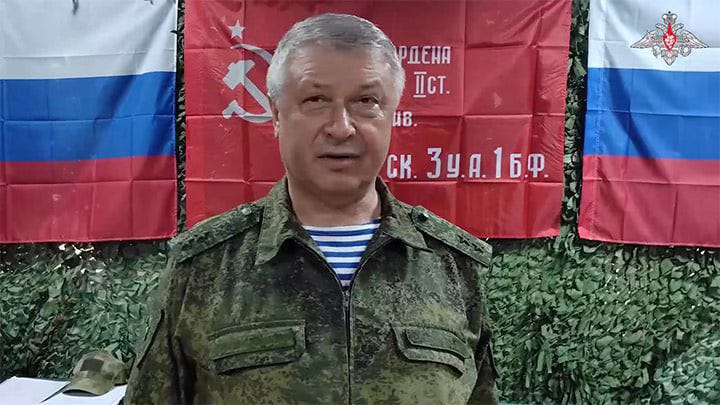
AS MOST OF MY READERS KNOW, in a past life I worked in the Office of the Assistant Secretary of Defense for Special Operations and Low Intensity Conflict (SOLIC), and in the Special Operations Division of the Joint Chiefs of Staff. In both roles, I was part of a team responsible for oversight and/or taskings for clandestine support to military operations, covert action and special activities that required a Presidential Finding, i.e. White House authorization.
I’ve dealt with these matters for 35 years.
It is from that perspective that I offer the following observation and assessment of the startling news of an assassination attempt on Lt. Gen. Vladimir Alekseyev, a deputy chief of Russia’s GRU military intelligence service.
Suspicion quickly, and naturally, fell on Ukraine’s special services, which have shown an extraordinary ability to carry out sophisticated assasination and sabotage activities deep inside Russia. But It’s also prudent to acknowledge a possibility that cannot be dismissed in the opaque ecosystem of Russia’s internal power politics: that this attack was state-directed, or at least state-tolerated.
Kremlin Intrigue
In modern Russia, internal violence has repeatedly been used as a tool of discipline, deterrence, and narrative control. The destruction of the aircraft carrying Wagner Group leader Yevgeny Prigozhin, once a close ally of Vladimir Putin before sparking a brief rebellion against the Kremlin’s conduct of the war, stands as a stark reminder of how quickly insiders can become expendable.
Against that backdrop, an attack on a senior intelligence figure cannot be ruled out as part of an internal settling of accounts, a warning to rivals, or a managed purge disguised as foreign aggression. In a system where senior officials and oligarchs seem to “fall” from windows with unsettling regularity, attribution is never just about who pulled the trigger, but about who benefits from the message sent.
Success in war is typically measured by advances on front lines. But you can also measure it by the places no one is supposed to bleed: elevators, stairwells, parking garages and entryways, far from the lines, where the security camera blinks and the doorman looks away. That is where the Russia-Ukraine intelligence war has been living for years—not in trenches or boasts, in the dark arts of clandestine tradecraft.
Russian authorities said Alekseyev was shot multiple times inside an apartment building just north of Moscow and rushed to a nearby hospital. Reporting from Reuters describes an attacker who posed as a delivery courier and then opened fire before fleeing. Authorities said the general was “conscious after surgery.”
Russia’s foreign minister Sergei Lavrov called it a terrorist attack and pointed at Ukraine without presenting public evidence. Ukraine’s foreign minister Andrii Sybiha said Kyiv had nothing to do with it.
“We don’t know what happened with that particular general—maybe it was their own internal Russian in-fighting,” he said. In any event, few tears would be shed over Alekseyev’s demise beyond Moscow: He’d been sanctioned by Western governments and linked in public allegations to several Russian covert operations abroad, including election interference and the 2018 poisoning of defector Sergei Skripal in England.
But here is a principal truth of clandestine operations: Assessing blame or claiming responsibility are parts of the psychological warfare battlefield, not an after-action courtesy.
Ukraine would be happy to have it both ways. But if the hit were authorized by Kyiv, it would be just the latest chapter in the spy vs. spy war that has been running alongside the drone war in recent years. Ukraine’s Security Service (SBU) and military intelligence (HUR) have repeatedly been linked to sabotage and killings of Russian military figures.
Russia’s services, in turn, have run assassination, abduction, and sabotage operations in occupied areas and beyond, and Moscow has carried out a long pattern of overseas clandestine violence.
Inside this contest, both sides seek the same advantage: strike at the enemy’s brain, not just his brawn.
The covert war inside the conventional war
If you want to understand this conflict, stop thinking in one channel. There is the kinetic campaign—drones, missiles, trenches, attrition. And there is the shadow campaign— targeting, source recruitment, infiltration, sabotage, and selective violence aimed at the adversary’s command-and-control.
In the shadow campaign, assassination attempts and targeted killings serve three overlapping goals:
First, disruption. Remove or distract a key planner and you degrade tempo. Senior intelligence officers are not just cogs. They are hubs of sources, access, plans, and authority. When that person goes down, subordinates scramble, files freeze, phones go quiet, and internal security overreacts. The machine slows.
Second, deterrence and intimidation. Targeted attacks tell every other general and colonel: you are reachable. That recognition forces changes in behavior—from convoy routes to comms channels, staffing, guard forces and personal travel. Caution evolves to paranoia, a heavy tax on performance.
Third, signaling: Covert strikes communicate the adversary’s capability and will to win. Sometimes the message is aimed squarely at your adversary’s war machinery and people. But once made public, a successful covert action can be used to bolster your own population’s morale, showing that you are fighting back when the front line is ugly and slow.
This is why the attacks inside Russia have been so politically freighted. Moscow calls them terrorism. Kyiv, still holding on four years after Russia’s unprovoked invasion, calls them a legitimate targeting of war criminals. Each side’s framing is an information operation that seeks to shape legitimacy.
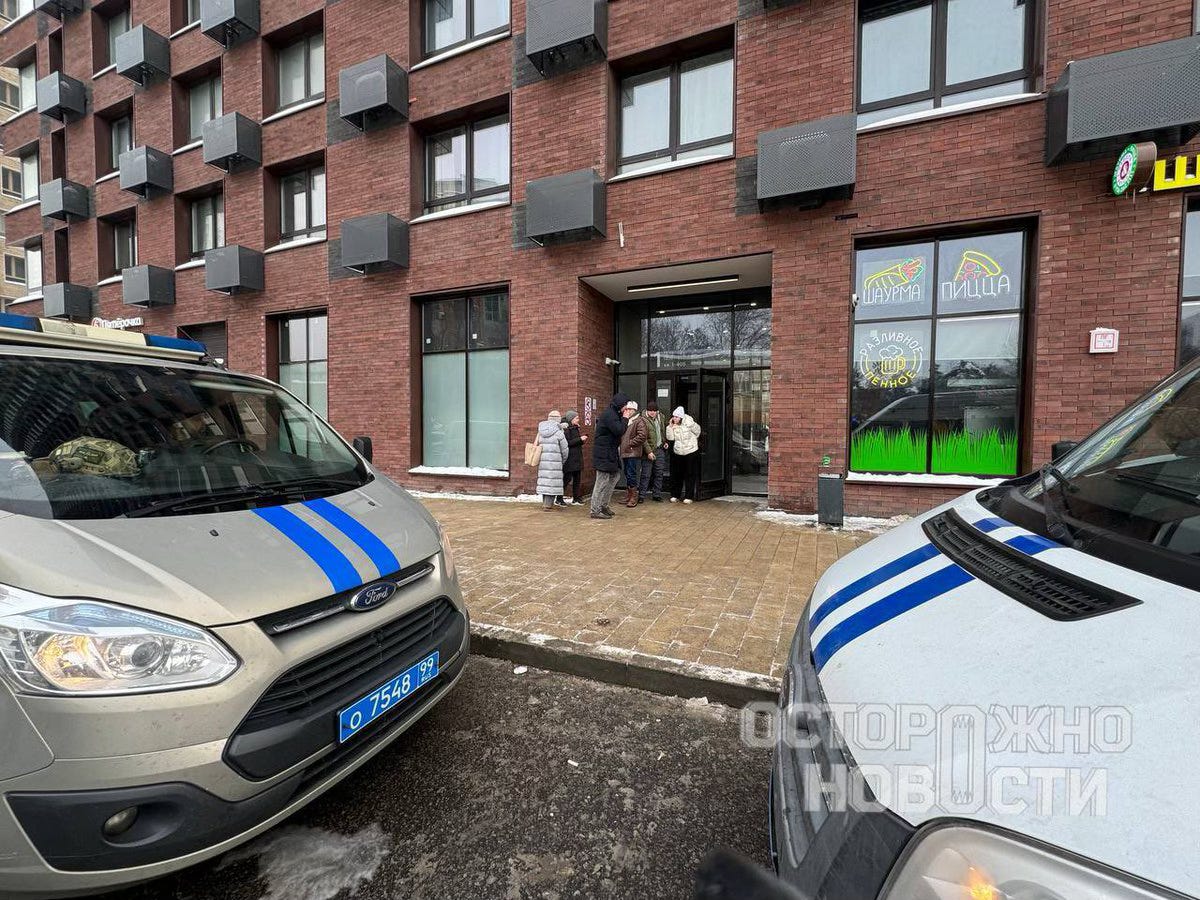
We have seen credible reporting of assassinations and attempted assassinations of senior Russian officers over the past year and a half, often in or near Moscow, which Russian investigators have repeatedly blamed on Ukrainian services. Ukraine has sometimes acknowledged involvement in operations against Russian military figures, while at other times it stays silent, because plausible deniability is useful when your opponent is nuclear armed and eager to make a case for escalation and even greater brutality. Russia, for its part, conducts its own covert and overt violence, particularly in the occupied territories of Kharkiv, Luhansk, Donetsk, Zaporizhia and Kherson. Sometimes it blames it on Kyiv partisans. Whatever, it’s aimed at intimidation, control, and the elimination of local resistance.
Why targeting a GRU deputy matters
If you are Ukraine’s war managers, and you are trying to survive a missile-and-drone campaign that grinds down your power grid and your civilians, you do not just want to shoot down missiles and drones. You want to break the kill chain upstream. That kill chain includes collection, processing, target development, weaponeering, and launch authority. In Russia’s system, the GRU is central to battlefield intelligence and target support.
From that perspective, a senior GRU deputy is a high value military objective. Remove him and you may not stop a strike tomorrow, but you create friction across the system that produces strikes next week and next month. Friction is sometimes the only realistic currency a defender can buy.
If you are Russia, you are watching the war creep into the capital in a way the Kremlin promised would not happen. Even a failed assassination attempt triggers an internal security surge. New guards. New routes. New protocols. More counterintelligence. More interrogations. It consumes bandwidth.
And it sends a message to every official living in a Moscow high rise: the enemy might already be in your lobby.
That cumulative pressure matters. It can force a choice: invest scarce resources into protecting elites at home or into sustaining offensive operations at the front. It also exposes seams between agencies, because every assassination attempt becomes a blame game between security services: who missed it, who leaked, who is incompetent, who is compromised.
Even now, much commentary has fixated on a YouTube video showing Alekseyev seated with Yevgeny Prigozhin, appearing relaxed, even laughing, during a tense interaction. From that thin visual evidence, some have leapt to the conclusion that the two men were friendly, aligned, or that Alekseyev somehow approved of or collaborated with Prigozhin’s actions.
That reading reflects a basic misunderstanding of how senior intelligence officers survive encounters with volatile armed actors. In my experience, a GRU general in that position was not signaling affinity or approval. He was managing risk. Prigozhin at that moment commanded a heavily armed force, significantly outnumbered Alekseyev and his entourage, and was operating outside normal chains of command.
What many viewers mistake for camaraderie is far more likely classic de-escalation tradecraft: mirroring tone, diffusing ego, buying time, and preventing an unstable actor from tipping into open violence. Sitting calmly, projecting control, and allowing an egomaniac to feel momentarily respected is not collaboration. It is containment.
Officers who survive long careers learn a hard rule: you do not confront a loaded weapon with righteous indignation. You lower the temperature, even if that means smiling for a camera while doing it.
The Creeping Shadow
Meanwhile, the shadow war is reciprocal, and it is expanding.
In this war, the map is only part of the truth. The other part is a quiet contest in which each side tries to reach into the other’s rear area and touch what is supposed to be untouchable.
Alekseyev’s shooting, whether it proves to be a Ukrainian operation or a Russian internal fracture, is a reminder that the intelligence war is now fully inside Russia’s domestic space. When generals start taking rounds in stairwells, the state is no longer separated from the front.
This is what spy vs spy looks like when it runs alongside an industrial war.
Not glamorous.
Not clean.
But strategically? A game changer. ###
Great in depth article. Thought provoking, but in the end, all assassinations are political, in both conception and result, no matter who does them. This is the realm where the military, intelligence, and politics merge.
Keep up the good work.
I am reminded of a few wonderful lines from the 1990 Coen Brothers movie, MILLER’S CROSSING, which I consider their masterpiece, about just this sort of botched killing. A mob boss, played by the late Jon Polito, is instructing a temporary underlying, played by Gabriel Byrne, about how to properly execute a man: “Something I try to teach all my boys: always put one in the brain.” Another underlying — Tic Tac, played by the late, great Al Mancini — reiterates this concept to Byrne before he walks into the woods of Miller’s Crossing with orders to kill Bernie Birnbaum, played by John Turturo: “the boss tell you how to do this? Your first shot puts him down, then you put one in the brain. Then he’s dead and then we go home.”
Apparently, the Coen Brothers films are not must-see cinema in Russia. Or Ukraine.