Where AI Thinks the US-Iran Conflict is Going
Some options are more probable than others, says Microsoft's Bing Copilot, but Trump’s state of mind is the wild card.
This is an analytic forecast based on publicly reported information through mid-February. It’s probabilistic, not predictive—meant to map plausible paths, not declare certainties, Bing Copilot cautions. And it does not take into account Monday’s report by The Washington Post saying Joint Chiefs Chairman Dan Caine had warned the White House that “a lack of munitions and support from allies could mean greater danger for U.S. troops.”
Current context
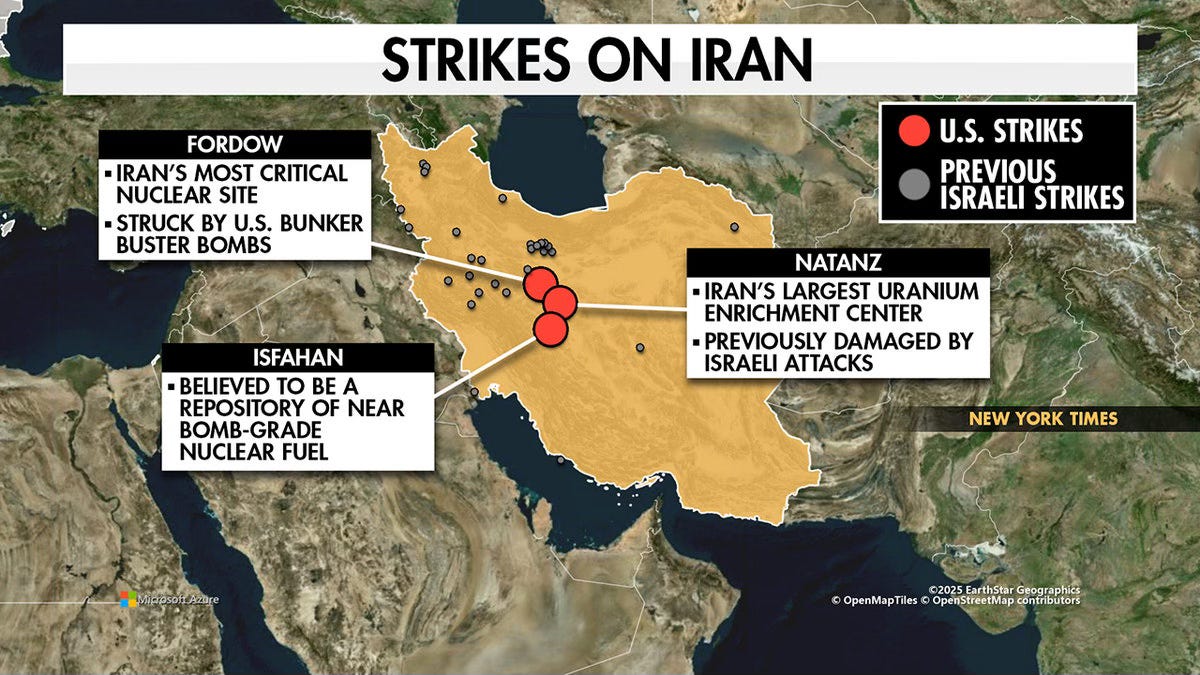
Post‑strike environment: Iran is still absorbing the impact of major U.S.–Israeli strikes on its nuclear infrastructure in 2025, which set back key facilities but did not eliminate nuclear know‑how.
High tension, active diplomacy: A second round of U.S.–Iran talks is underway amid warnings that a U.S.–Iran war could be “imminent” and last weeks, even as both sides publicly claim to seek a deal.
Iran’s red lines: Tehran shows little willingness to concede on missiles, regional proxies, or the core of its nuclear program—pillars of its defense strategy.
Against that backdrop, the next 12 months likely fall into a few main scenarios.
Scenario A: Coercive diplomacy short of war
Approximate likelihood: Medium‑high
Core idea: Intense military pressure and sanctions continue, but both sides stop short of full‑scale war while pursuing a fragile, stop‑start negotiation track.
Key features:
Talks continue in fits and starts: The Muscat/Geneva channel remains open, with intermittent walk‑outs and “deadlines” that keep being extended.
Incremental nuclear steps: Iran rebuilds parts of its program, reduces cooperation with the IAEA, and keeps edging toward shorter breakout times without openly crossing the line into weaponization.
Managed military signaling:
Iran and Russia hold more joint drills and naval maneuvers in the Sea of Oman and beyond.
The U.S. sustains a heightened regional posture (carriers, air assets, missile defense) but avoids direct strikes unless there is a clear trigger.
Proxy friction, not open war: Attacks by Iran‑aligned groups in Iraq, Syria, or the Gulf flare periodically, but are contained through back‑channel messages and limited retaliation.
Implications:
Risk of miscalculation stays high, but both sides still see more to lose than gain from all‑out conflict.
Iran’s nuclear latency and missile program remain largely intact, keeping the core strategic dilemma unresolved.
Scenario B – Limited war, rapid escalation risk
Approximate likelihood: Medium
Core idea: A trigger—proxy attack, misread signal, or failed deadline—sparks a U.S.–Iran confrontation that begins as “limited” but is intense and could last weeks.
Potential triggers:
A high‑casualty strike on U.S. forces or shipping attributed to Iran or its proxies.
Collapse of talks after a hard deadline set by Washington, followed by new Iranian nuclear moves (e.g., higher enrichment, new facility revelations).
Likely dynamics:
U.S. campaign:
Air and missile strikes on Iranian nuclear, missile, and IRGC targets, framed as time‑limited and focused on “restoring deterrence.”
Iranian response:
Missile and drone attacks on U.S. bases and regional partners; attempts to disrupt shipping in the Gulf and Red Sea; intensified proxy activity.
Regional involvement:
Israel may conduct parallel or opportunistic strikes; Gulf states brace for spillover and may quietly support U.S. operations.
Implications:
Further physical degradation of Iran’s nuclear infrastructure, but also stronger domestic calls in Iran for overt nuclear deterrence.
High risk that “limited” war proves hard to contain, especially if casualties or economic disruption are severe.
Scenario C – Fragile interim deal
Approximate likelihood: Low‑medium
Core idea: Under intense pressure, both sides accept a narrow, time‑bound arrangement that trades limited sanctions relief for verifiable nuclear and regional constraints.
Possible elements:
Nuclear: Caps on enrichment levels and stockpiles; enhanced monitoring at key sites; no new advanced centrifuge deployments.
Regional: Informal understandings to dial down proxy attacks and missile tests near U.S. and allied assets.
Economic: Targeted sanctions relief (e.g., oil exports under quotas, limited financial channels) tied to compliance milestones.
Why it’s hard but not impossible:
Iran insists it will not “give up its missiles and defense capabilities” or accept “bullying,” limiting the scope of any deal.
Washington wants more durable constraints than a narrow technical fix, but may accept an interim step to avoid war in an election‑sensitive period.
Implications:
Tensions cool but do not disappear; both sides treat the deal as a tactical pause, not a strategic reconciliation.
Hardliners in Iran and the U.S. criticize the agreement as either too weak or too risky.
Scenario D – Strategic rupture and nuclear breakaway
Approximate likelihood: Low (but high impact)
Core idea: After another major strike or diplomatic collapse, Iran decides that only overt nuclear deterrence can guarantee regime survival and moves toward exiting the NPT and openly pursuing a weapon.
Pathways:
Snapback of UN sanctions and further isolation push Tehran to threaten or execute NPT withdrawal.
Domestic pressure after repeated attacks on nuclear facilities fuels a narrative that “only a bomb prevents another Midnight Hammer,” the June 2025 air attack on Iran’s nuclear facilities.
Implications:
A direct challenge to the global non‑proliferation regime.
Strong likelihood of pre‑emptive or preventive military action by the U.S. and/or Israel.
Long‑term regional arms race dynamics.
Bottom line
Over the next 12 months, the most plausible band of outcomes runs between Scenario A (coercive diplomacy on the brink) and Scenario B (limited war with escalation risk), with Scenario C (fragile interim deal) as a less likely but still realistic off‑ramp. Scenario D remains a tail risk—but one whose probability rises if strikes continue without any political horizon.
Key Elements of Trump’s Approach to Iran
Recent reporting shows that Trump’s approach to Iran mixes diplomacy with a willingness to use military force, including past strikes and consideration of new limited strikes. His administration has simultaneously pursued negotiations while expanding military deployments and economic pressure.
1. Diplomacy First — but Force Remains on the Table
The White House states that Trump’s “first option is always diplomacy”, but he is willing to use lethal force if necessary.
Negotiations have continued, including discussions with Israel about expanding or continuing talks.
Trump has repeatedly said he prefers a deal over war, though the terms he would accept remain unclear.
2. Military Pressure and Preparedness
The U.S. has shifted over 150 military aircraft into position for potential strikes, creating one of the largest regional buildups in two decades.
Trump has said he is “considering” a limited strike to push Iran toward accepting a deal on U.S. terms.
He has warned Iran of “something very tough” if U.S. demands are not met.
3. Economic and Policy Pressure
Trump signed an executive order reaffirming the national emergency with respect to Iran and enabling tariffs on countries that buy Iranian goods or services.
This expands economic pressure not only on Iran but also on third countries engaging with Iran.
4. Past Military Action
The administration cites Operation Midnight Hammer as an example of decisive action, claiming it destroyed Iranian nuclear facilities.
Iran, however, continues to pursue negotiations and maintains capabilities that concern U.S. and Israeli officials.
How Analysts Interpret This Approach
Coercive diplomacy: Combining negotiations with credible threats of force.
Escalation readiness: Large-scale military positioning suggests preparation for rapid escalation if talks fail.
Unclear endgame: Analysts note uncertainty about what kind of deal Trump would ultimately accept.


I saw exactly nothing from "AI" that would not have been postulated by human sources. Do you guys really have to do this?? If it continues I will be forced to seriously reconsider my subscription.
I don't see that the AI had any forecast of an all out attack by Iran. If they think they're backed into a corner with no way out, might they decide to "use it or lose it."
Very low probability? Black Swan?