

Trump On China's Spying on the US: Meh
Both sides do it, Trump said, so he and Xi didn’t linger on the subject in Beijing

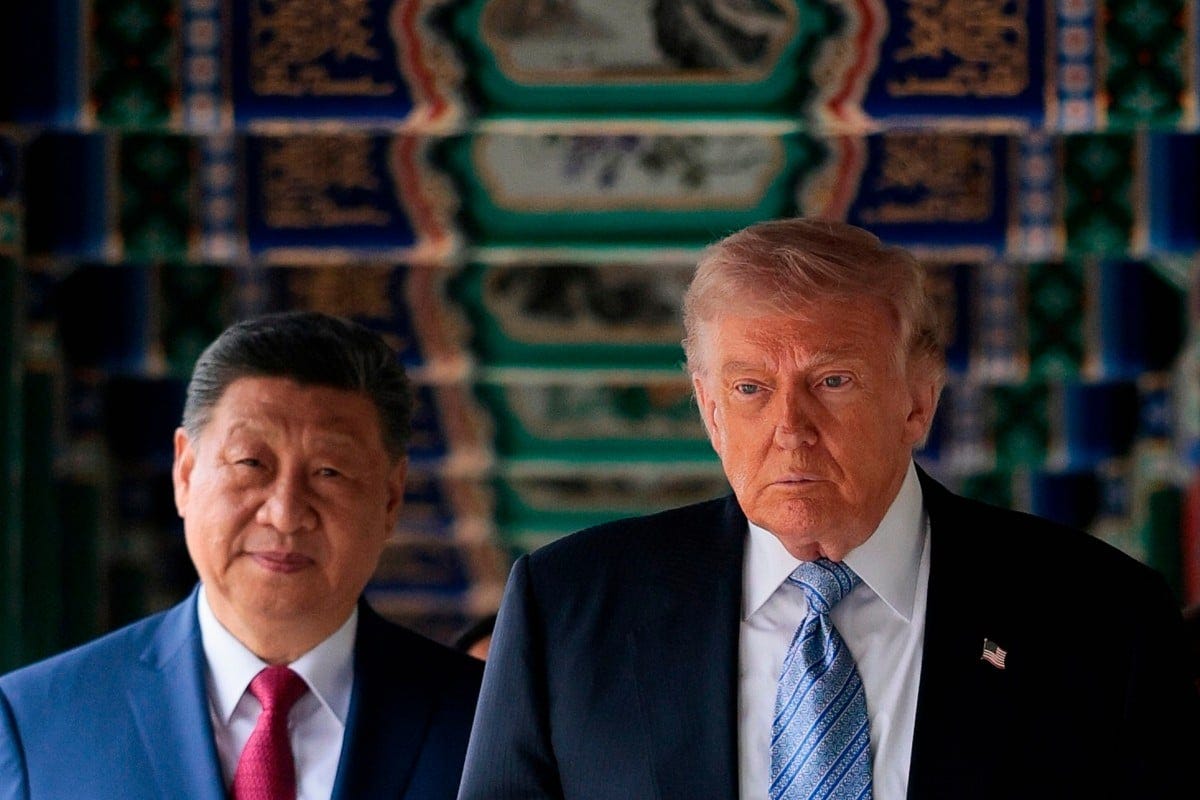
President Trump appeared to shrug off an alarming surge in Chinese espionage and cyber assaults on the U.S., suggesting to reporters aboard Air Force One winging home on Thursday that he and Xi Jinping traded slight complaints about the other’s covert operations but didn’t linger on the subject.
Asked whether he raised China’s aggressive cyber infiltrations of U.S. government agencies and infrastructure during their talks, Trump said, “I did. And he talked about attacks that we did in China. Y’know, what they do, we do too.”
“They’re talking about the spying. Well, we do it too,” he said. “We spy like hell on them too.”
“I told him, ‘We do a lot of stuff to you that you don’t know about and you’re doing things to us that we probably do know about,’” Trump added.
The president’s casual brushoff of record-setting Chinese espionage threats was a sharp departure from one of his major campaign themes in 2016 and again in 2020, when he repeatedly denounced China’s theft of U.S. intellectual property.
In 2018 he cited China’s theft of intellectual property as one of his reasons for imposing $200 billion in tariffs on Chinese imports, USA Today noted. His Justice Department also launched the China Initiative to combat economic espionage, which targeted hundreds of prominent Chinese-American academics and scientists, many of whom lost their jobs. It was abandoned in 2022, when the Biden administration blamed it for wrongful prosecutions and spurring hate attacks on Americans of Chinese origin while doing little to stem Beijing’s espionage.
But since then Chinese subversion here has only surged and grown bolder, much to the alarm of security officials.
Chinese agents disguised as researchers have increasingly been discovered making direct pitches to Capitol Hill staffers and State Department officers to share inside dope for pay. Chinese students were recently convicted of spying on U.S. military bases. So-called “Chinese police stations” in the U.S. were uncovered keeping an eye in dissidents here. Then there is the now infamous group known as Volt Typhoon, which slipped cyberspies into critical infrastructure systems, like power grids and water treatment plants, “with the goal of potentially disrupting or sabotaging them to distract the American public in the event China moves to invade Taiwan, officials have assessed,” according to a report from NextGov/FCW.
Asked about these intrusions aboard Air Force One on his return from China, Trump cast doubt on whether the widely documented incidents were really true. “Well, you don’t know that,” he told reporters. “I mean, I’d like to see it, but it’s very possible that they do.”
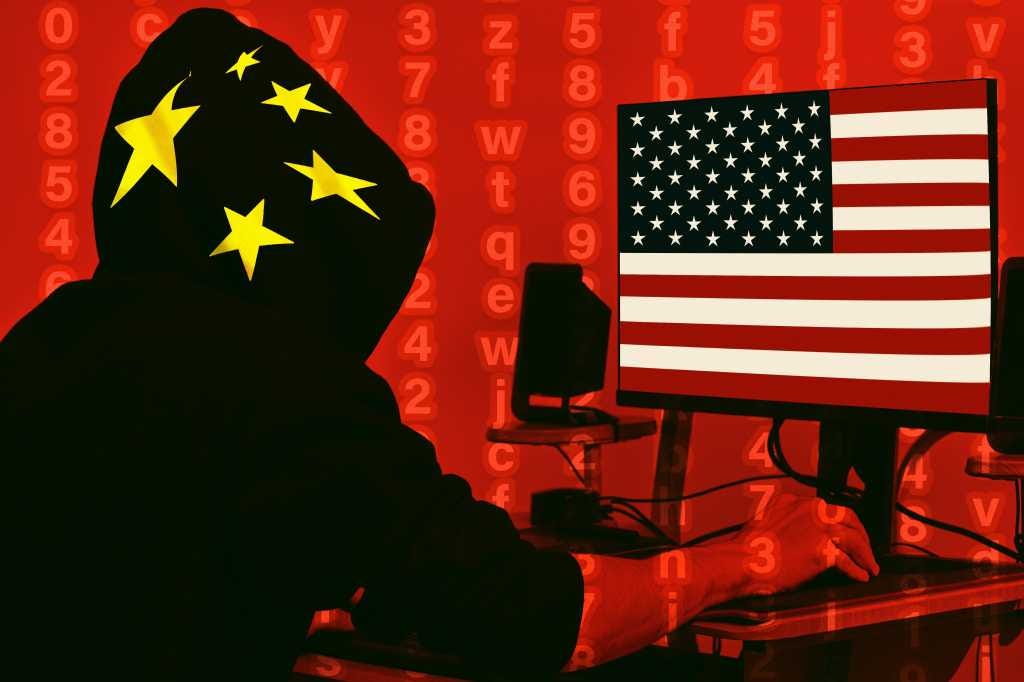
This isn’t the first time Trump has avoided confronting Xi on these assaults. Just before their October 2025 meeting in South Korea, U.S. defenders discovered a year-long intrusion of F5, a cybersecurity vendor for U.S. government agencies and 85 percent of Fortune 500 firms.
“President Trump appeared to stay silent,” said the Center for a New American Security, a bipartisan group that embraces traditonal U.S. defense priorities. “Trump’s decision to avoid publicly addressing Xi continues a presidential pattern that risks emboldening China to advance its cyber operations against the United States,” it said.
For sure, President Biden, too, only raised “deep concerns” about China’s targeting of critical infrastructure during his meeting with Xi in 2024, CNAS said, “but readouts of bilateral meetings from 2021 and 2023 lacked any mention of cyber, despite the United States enduring brazen cyberattacks from Beijing during this period.”
Sean Cairncross, Trump’s National Cyber Director, said such silence only encouraged Beijing. “We cannot expect [China’s] behavior to change if we’re ambiguous about it,” he said.
But it’s also true, as Trump hinted, that the United States energetically spies on China. In 2013, ex-National Security Agency contractor Edward Snowden leaked files to journalists showing that the NSA conducted extensive spying operations in China and Hong Kong, targeting mobile phone companies to steal SMS data, university students, and public officials. Over the years, Snowden’s leaks showed, the U.S. had launched over 61,000 global hacking operations, with a focus on Chinese infrastructure.
Unlike the U.S., China doesn’t publicize America’s cyberwar intrusions. It’s also relatively quiet when it arrests Chinese spying for the CIA. Fact is, its ruling Communist Party has a systematic aversion to admitting mistakes and weaknesses in public.
And maybe that’s why Xi and Trump are happy not to talk about them.
For a compilation of major Chinese cyber and espionage campaigns against the U.S., follow this link.