

The Final Word on Carlos the Jackal
A compelling new biography traces the rise and fall of the “world’s first super-terrorist”

IN THE END, IT WAS CARLOS THE JACKAL’S TESTICLES THAT DID HIM IN. Having boasted of bedding more than 400 women and killing 83 people by his own hand, he was suffering from a condition known as varicocele—“essentially a varicose vein in the scrotum,” as author Joby Warrick puts it. It was 1994, and the Venezuelan-born Marxist, anti-Semite champion of the Palestine cause and hired killer, age 44, had been given sanctuary by Sudan’s Islamist regime, which was also harboring Osama bin Laden.
Carlos’s Jordanian wife wanted a child, and his medical condition affected his sperm count, as well as his extra-curricular activities with other women. What Carlos didn’t know was that the CIA was tailing him. The routine procedure on his private parts provided the ideal opportunity to bring an end to his storied career as, in Warrick’s words, “the first of a breed of international super-terrorists, a larger-than-life outlaw whose deeds spanned four continents and captured the attention of the entire world.”
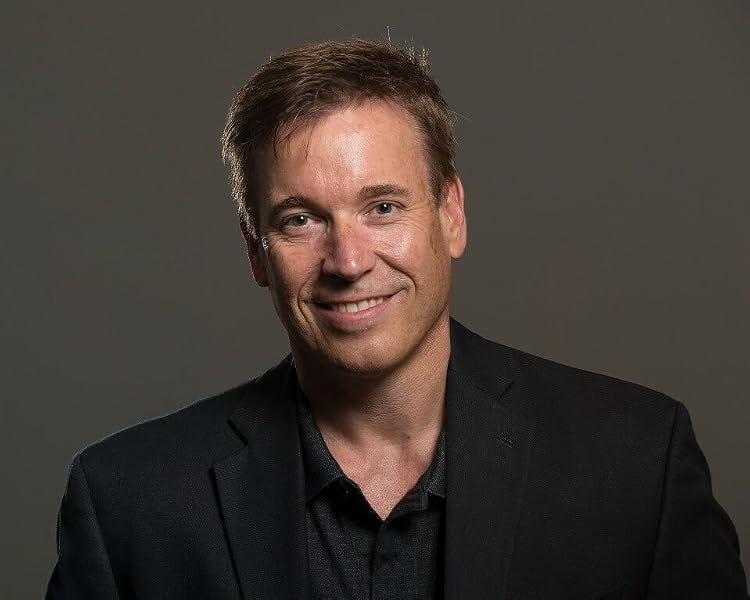
Warrick is well equipped to unspool the complete story of Carlos (real name: Ilich Ramírez Sánchez). He has spent almost three decades as a national security correspondent at The Washington Post, and is the author of the outstanding Triple Agent, the story of the 2009 Al-Qaeda suicide bombing in Khost, Afghanistan that left seven CIA officers dead. His Black Flags, which traced the rise of the Islamic State, won the 2016 Pulitzer Prize for nonfiction. Despite this high bar, The Jackal does not disappoint. A rollicking, fast-moving, and at times dryly humorous book, it wears its rigorous research lightly.
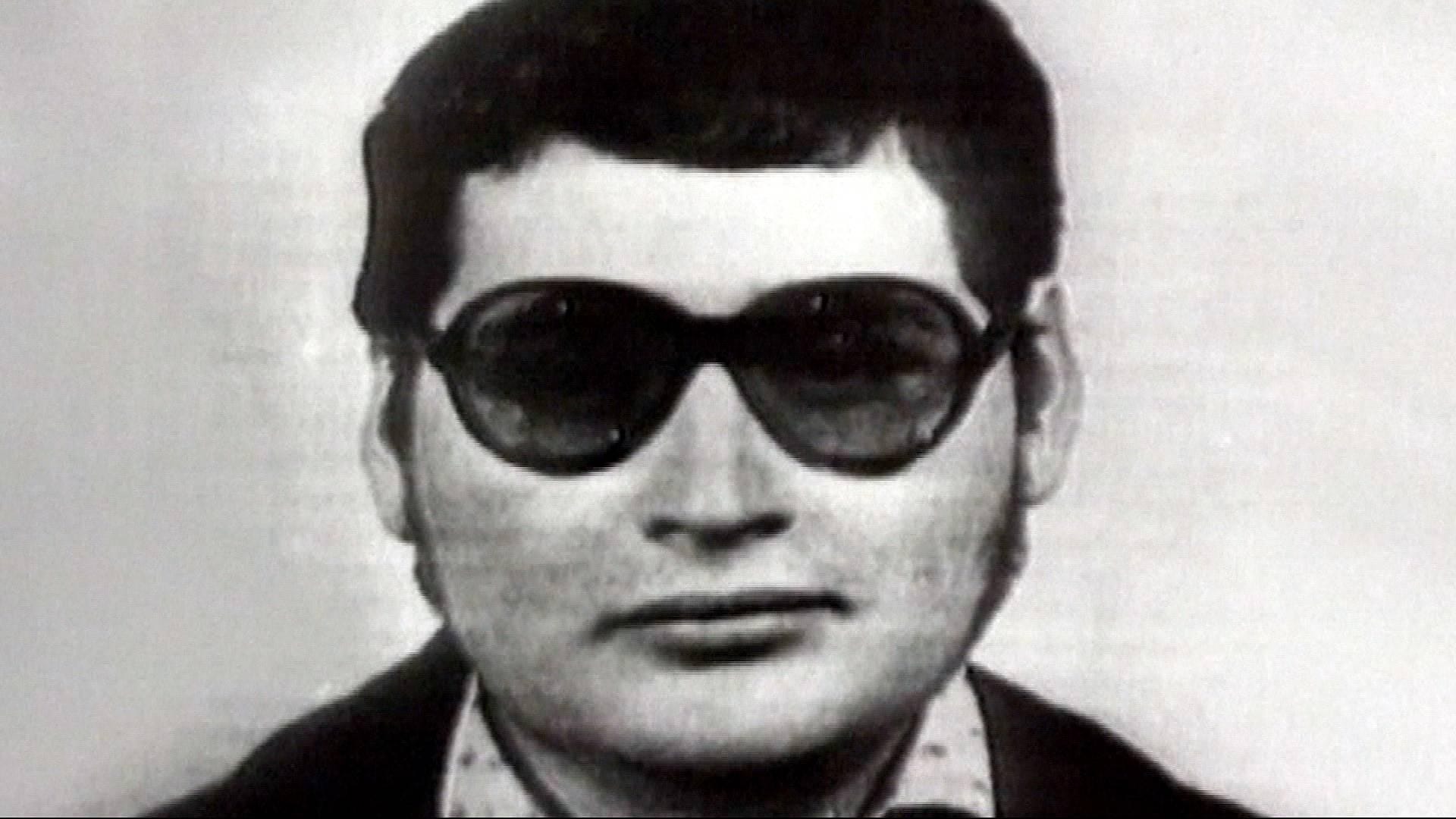
Like his famous 1974 photo, from a fake Peruvian passport showing him wearing tinted glasses, a leather jacket, sideburns, and a faint smile, Carlos is a figure from another age. There’s also a retro tinge to Carlos’s activities. This was an era when terrorists hijacked planes, but never considered turning them into deadly missiles. He was the son of a lifelong communist who named his three boys after the first leader of the Soviet Union (his brothers were Vladimir and Lenin), and forbade them from drinking Coca-Cola because it was “an imperialist drink.”
Apparently, Carlos did not consider champagne or whisky to be anti-revolutionary. He imbibed enough alcohol at Moscow’s Lumumba University to be kicked out, though his hiding a prostitute in his closet, impregnating his Cuban girlfriend, and taking part in an unauthorized protest outside the Venezuelan Embassy were also factors. The KGB considered recruiting him but abandoned the notion because of his “appalling record as a student.”
Tabloid Fame
The moniker Carlos the Jackal was conjured up by the British tabloids in1975 after it was reported that Frederick Forsyth’s thriller The Day of the Jackal was on a bookshelf in a London apartment where a supposed Peruvian economist Carlos Martinez had been staying. The terrorist himself, an early expert at branding, embraced the label. “The jackal is a nice little animal, you know?” he later commented. “It’s a predator, but very pretty.” When he led a six-person team that attacked the OPEC headquarters in Vienna in December 1975, taking more than 60 hostages and killing three, he shouted, “I am the famous Carlos—you know who I am.” He wore a beret, angled on his head, doubtless as homage to Ernesto “Che” Guevara, the Argentine revolutionary. Spotting a young Austrian secretary sobbing, he told her, “You can go home. You are too beautiful to die.” Afterward, some of the hostages asked for his autograph.
Identifying Carlos is always a problem, with some authors confusingly referring to him as Sanchez or Ramirez. Warrick opts for Ilich, his first name, until page 130, when the tabloid-naming is recounted, and uses Carlos thereafter. Separating reality from myth is also an issue. Warrick is clear-eyed, pronouncing: “The real Carlos was flawed, prone to mistakes and often hobbled by the sheer weight of his massive ego.”
Carlos’s exploits were eagerly inflated by the media and, in turn, by the man himself. His success with women is an enduring mystery. Nicknamed “El Gordo”—“Fatty”—as a child, he had, as Warrick puts it, “unusually fleshy breasts for a man.” Magdalena Kopp, a German revolutionary, had been repulsed by him but succumbed to his advances, which included his placing a pistol on her nightstand, and says she endured a “sexual act without any emotion, almost a rape.” Despite this, she subsequently became his wife, explaining, “I began to believe his speeches about women’s equality and personal responsibility in the service of the world revolution. “At the time,” she said, “I was not in a position to stand up to this man. Deep down, I also knew that he was dangerous and that I couldn’t just walk away.”
Wadi Haddad, leader of the Popular Front for the Liberation of Palestine (PFLP), eventually tired of Carlos’s excesses, shouting at him: “You are an executioner, and not a movie star!..I have a place for heroes who sacrifice for the sake of liberation. Not those who are tempted by money!”
Carlos subsequently carried out attacks on behalf of Libya’s Muammar Gaddafi, Iraq’s Saddam Hussein and Romania’s Nicolae Ceaușescu.
By the time Carlos reached Khartoum, he was a largely spent force, though he set about trying to reactivate his network and acquire new weapons. He had not reckoned, however, with Cofer Black, the CIA’s Khartoum station chief and later the man who led America’s global war against Al-Qaeda in the immediate aftermath of 9/11. Remarkably, the U.S. Department of Justice had not obtained an arrest warrant for Carlos, so the CIA opted to hand over its painstakingly acquired surveillance information to the French, who had already tried him in absentia for the triple murder of two French counterintelligence agents and a pro‑Palestinian Lebanese informer. Thus, when a groggy post-op Carlos was snatched by a joint French-Sudanese team on Aug. 13, 1994, the CIA hand was entirely hidden. Warrick has provided a service by recounting, for the first time, the agency’s full role in one of its most successful operations of modern times.
Last year, Warrick visited Carlos, now 75, in Poissy, France where he has been imprisoned for the past 32 years. The interview confirmed that the most famous terrorist of the era before bin Laden had become a diminished, even delusional, figure. “In Sudan, I should have shot those bastards,” he said. “I wouldn’t be in prison.”###
Longtime Anglo-American journalist and Royal Navy veteran Toby Harnden is the author of Bandit Country: The IRA & South Armagh (1999), Dead Men Risen: An Epic Story of War and Heroism in Afghanistan (2011) and First Casualty: The Untold Story of the CIA Mission to Avenge 9/11 (2021). His next book, The 39: Uncovering the CIA’s Secret Heroes, about the undisclosed recipients of the Distinguished Intelligence Cross, the agency’s equivalent of the Medal of Honor, will be published by Simon & Schuster in March 2027.
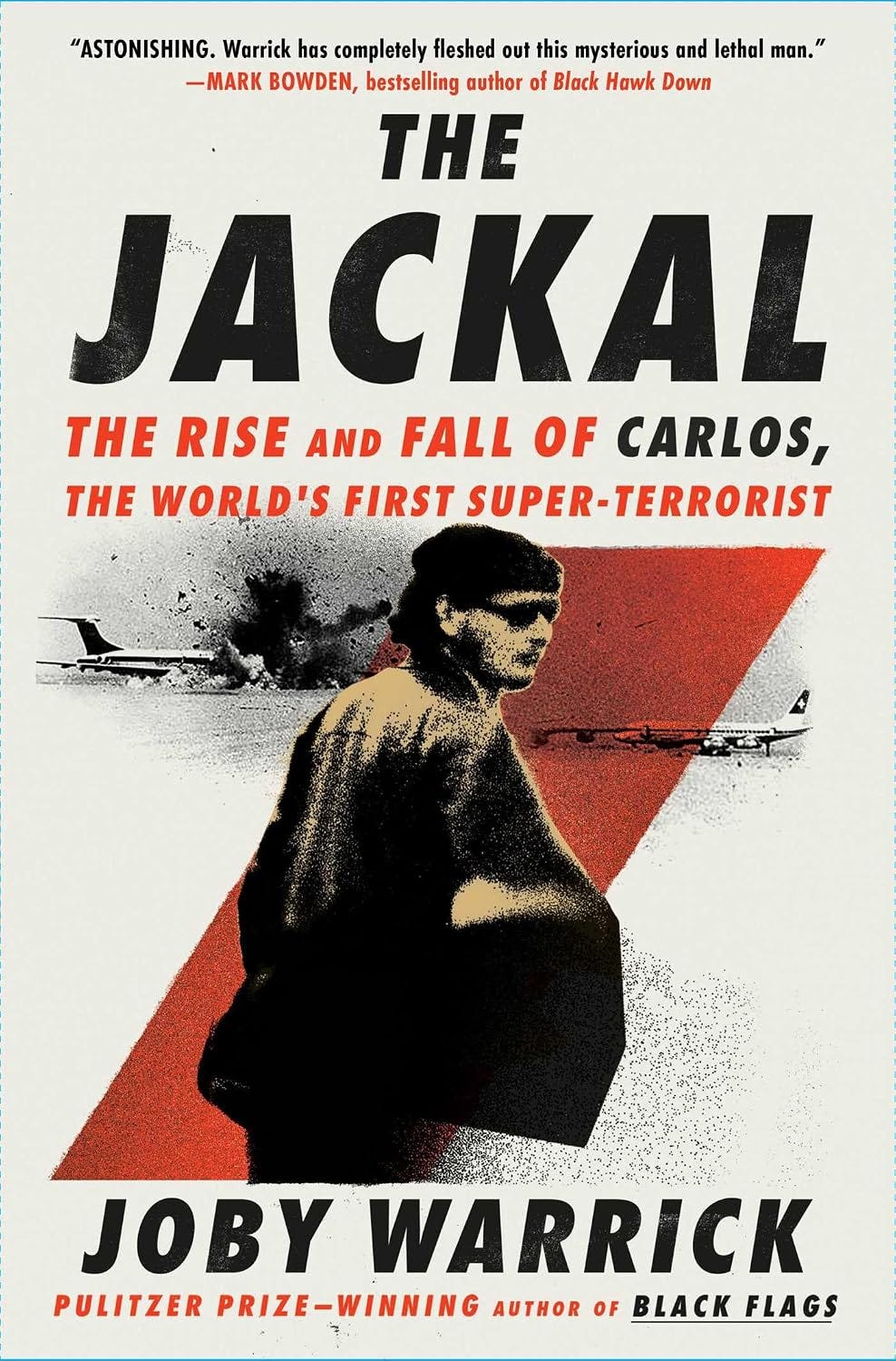
The Jackal: The Rise and Fall of Carlos, the World’s First Super-Terrorist, by Joby Warrick, Scribner, 384 pages, $30. August 18, 2026.
My sense of repulsion overtakes my interest in learning about spies. Maybe I am more interested in spies than terrorists.
Maybe you should get Joby Warrick to write for Spy Talk. That would be something. Wouldn't it?