

The Ahmadinejad Plot
The New York Times reveals a bizarre US-Israeli regime-change scheme to return former hardline Iranian President Mahmoud Ahmadinejad, rumored to be a secret Israeli agent, to power.

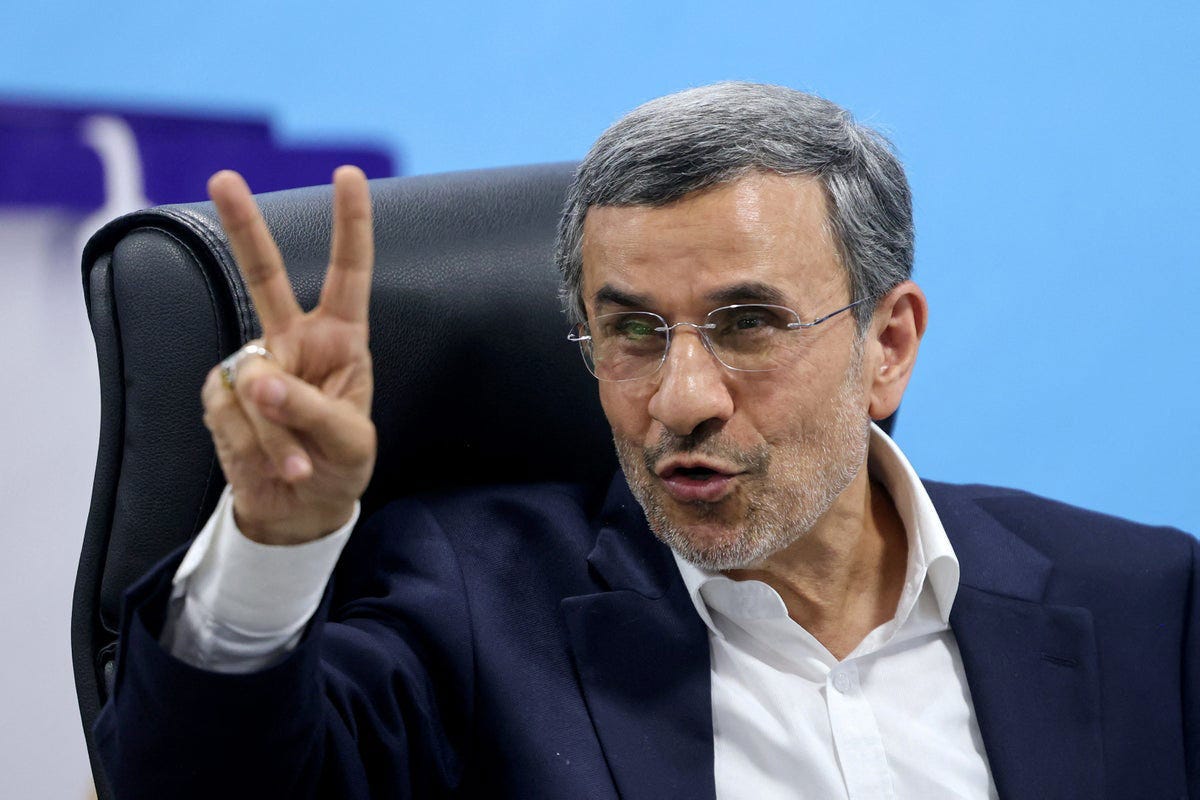
Cascades of shock, astonishment, disdain, intrigue and speculation swirled Wednesday over a blockbuster report that Israel plotted to return former hardline Iranian leader Mahmoud Ahmadinejad to power as part of its regime-change plan for Tehran in the first days of the Iran war.
“This is without doubt one of the craziest stories I have ever covered, if not topping the list,” said Ronen Bergman, a member of the New York Times reporting team that broke the story of high level intrigue late Tuesday night, in a note to his followers accompanying his distribution of the piece.
The plan, according to sources who spoke to the Times, was for U.S.-Israeli air strikes to decapitate the regime’s leaders and at the same time kill off guards keeping Ahmadinejad, who’d fallen out of favor with Ayatollah Khamenei and senior leadership, under virtual house arrest. With the former president freed, then, supposedly, Kurds armed by the U.S. would be mobilized to invade Iran and head toward Tehran, where they’d add to the unrest and help topple the government. Ahmadinejad, widely rumored inside Iran to be a secret Israeli asset, an expat expert told SpyTalk, would then take power.
“[T]he Israeli plan foresaw a combination of influence campaigns carried out by Israel and the Kurdish invasion creating political instability in Iran and a sense that the regime was losing control,” reported the Times. “In a third stage, the regime, under intense political pressure and the weight of damage to key infrastructure like electricity, would collapse, allowing for what the Israelis referred to as an ‘alternative government’ to be established.”
The scheme seemed laced with mind-boggling paradoxes and intrigues. The new regime would be headed by Ahmadinejad, whose two terms as president, from 2005 to 2013, were marked by a severe crackdown on political dissent, an expansion of uranium stocks, and inflammatory rhetoric directed at the U.S. and especially Israel, which he would only refer to as a “Zionist regime” that had to be “eliminated.”
Since then, however, his views had dramatically softened, says Hooman Majd, an Iranian-born American journalist, author, and political commentator focused on Iranian affairs, who served as a translator for Ahmadinejad on his trips to the United Nations.
“Over the last few years, he had sort of changed his stance on being anti-Zionist. He even gave an interview to an Israeli newspaper, for example, which is a big no-no for an Iranian politician,” Majd, author of The Ayatollah Begs to Differ: The Paradox of Modern Iran and other books on the regime, told SpyTalk in an interview. “There is not a single Iranian politician who’s ever done that, and certainly no Iranian president would ever do that, former or otherwise”—which prompted questions about his loyalty and eventually led to what amounted to his house arrest and jailing of his political aides.
Suspected Treachery
Rumors swirled that Ahmadinejad was not just disenchanted with the regime of Ayatollah Ali Khamenei but had been secretly working for Israel all along, Majd said. The whispered, convoluted reasoning went that his extremist presidency, which had effectively derailed warming relations with the U.S. and Europe under his predecessor Mohammad Khatami, served only to bolster Israeli Prime Minister Benjamin Netanyahu’s campaign for regime change.
