The Afghan Shooter and the Limits of Vetting
For former CIA soldier Rahmanullah Lakanwal, life just got too hard
Many decades ago in South Vietnam, I was running a spy targeted on communist troops headquartered in the jungles about 15 miles away from my office in Da Nang, a bustling former French colonial port on the central coast. When I arrived on scene in late 1969 we didn’t know much about Mr. Dao, a man twice my age, other than he’d worked for the French before us and was a fervent anticommunist. That was good enough for my predecessor, who had hired him a month or so before I arrived. I assumed Dao had been vetted, starting with a records check with the South Vietnamese police, and mission testing to see if he would carry out an assignment without question or raising suspicion. Frankly, I don’t remember whether I asked in my nervous first days. My job was to keep him and his network of informants gathering information on the enemy—and they were good at that—and to elicit more about him during our first secret meetings in ramshackle downtown hotels.
It turned out, though, he’d never been polygraphed, so we started with that.
“Are you a communist?” he was asked. “No,” he said, and the so-called lie detector showed no deception.
“Are you loyal to the government of Nguyen Van Thieu?”—the president of South Vietnam—he was next asked. “Yes,” he answered, but this time the machine went a little crazy, scratching a jitter of red ink on the rolling white paper. The Green Beret polygrapher doing the test for me didn’t know what to make of the apparent contradiction. Nor did his bosses, who let it go. Nor did I—until several months later, when I saw him in a newspaper photo of protesters demonstrating against the powerful, anti-Thieu An Quang Buddhists, who favored negotiations with the Viet Cong to end the war. It would turn out that Dao had dual loyalties: he was secretly a member of a militantly nationalist group, the Việt Nam Quốc Dân Đảng, which virulently opposed any steps that could help the communists, including, of course, the U.S. withdrawal from Vietnam.
Present Tense
I immediately sent a warning cable to Saigon headquarters. The answer? Dao’s intelligence was so good they were keeping him on. And so I continued to work with him until the end of my tour, always wondering how Dao’s duel loyalties might be playing us. It would take the intervention of my boss, an Army major who would later rise to become commander of the Defense Intelligence Agency, to discover more Dao deceptions and adroitly wean him from the net.
“Are you a communist?” he was asked. “No,” he said, and the so-called lie detector showed no deception.
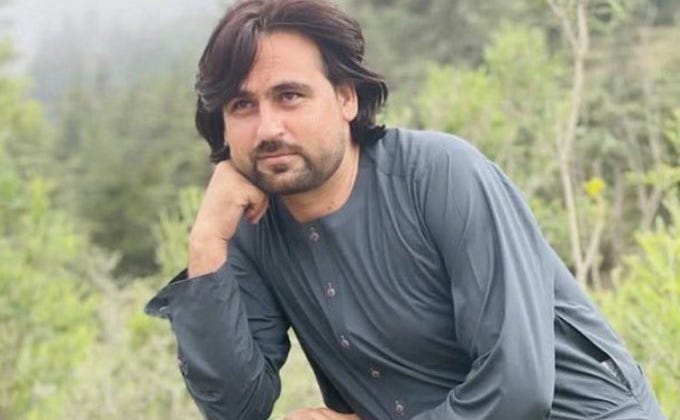
All this is a long way around the issues of vetting and Rahmanullah Lakanwal, the former Afghan paramilitary who attacked the two West Virginia National Guard troops in Washington last Wednesday, killing one of them, leaving the other clinging for his life. The Trump administration is using the vetting issue to cast suspicion on every Afghan who managed to escape the Taliban in 2021.
By all accounts Lakanwal, who worked with one of the CIA’s vicious hunter-killer Zero units, infiltrating villages to ID Al Qaeda operatives and knock down doors, “quickly gained a reputation as a stellar soldier,” The Washington Post reported. A former commander said he “had to go through multiple layers of vetting: to see if he was good at following orders, reliable during what were often chaotic firefights and loyal to the U.S. advisers who joined them on the missions.”
All too predictably, President Trump and his minions were quick to blame the Biden administration for a failure to vet Lakanwal properly (even though his own officials had awarded the Afghan amnesty in April, after “multiple, in-person asylum meetings at a U.S. Citizenship and Immigration Services office in 2024,” a case worker told CBS.
“Let’s be clear on what the vetting system is and it isn’t,” Samantha Vinograd, a top counterterrorism official in the Biden administration also told CBS. “The vetting system is a system in which an individual’s identifiers — their biographic information, iris scans, fingerprints, facial images — are run against data sets of information about individuals with ties to terrorism and criminal history. The vetting system is not predicative of whether an individual with no derogatory information is or is not going to become violent.”
Dark Clouds
Depression struck Lakanwal not long after his arrival in the U.S. with his wife and five sons following the chaotic exit from Kabul’s Hamid Karzai International Airport in August 2021. “He entered the United States in 2021 through Operation Allies Welcome, a program that evacuated and resettled tens of thousands of Afghans after the American withdrawal. Many had worked alongside U.S. troops and diplomats,” according to The Associated Press.
“But his grant of asylum did not come with a renewed work authorization card, which made it difficult to find a job,” a former U.S. intelligence officer told The Post, “citing conversations with Lakanwal’s fellow Unit 03 fighters after the shooting. The inability to support his family weighed heavily on Lakanwal.”
No one would be surprised to learn Lakanwal was suffering from post traumatic stress, for himself and the plight of his fellow Afghan veterans, including relatives. Some 76,000 Afghan allies and their families had been evacuated, but last January the Trump administration “abruptly halted services for refugees in the United States, including Afghans,” CNN reported at the time. As of last March, another 64,552 Afghan applicants for Special Immigrant Visas “remain[ed] trapped in processing purgatory,” it said.
Lakanwal “had been unraveling for years, unable to hold a job and flipping between long, lightless stretches of isolation and taking sudden weekslong cross-country drives, the A.P added. His “behavior deteriorated so sharply that a community advocate reached out to a refugee organization for help, fearing he was becoming suicidal.”
In that, he was hardly different from his American cohorts. A 2021 study by Brown University estimated that 30,177 veterans of post-9/11 conflicts had died by suicide. “At least four times as many active duty personnel and war veterans of post-9/11 conflicts have died of suicide than in combat,” it said. We don’t have figures for our Afghan allies, either those who managed to get here or, of course, those back home desperately hiding from Taliban killers.
Turn Toward Jihad?
On Sunday, DHS Secretary Kristi Noem claimed without evidence that Lakanwal had been “radicalized since he’s been here in this country. We do believe it was through connections in his home community and state…” Perhaps she’d been handed a LinkedIn post by Sarah Adams, a former CIA counterterrorism targeter, Republican congressional staffer and co-author of Benghazi: Know Thy Enemy, a controversial account of the 2012 terrorist attacks on the U.S. consulate and CIA Annex in Libya, which posited that the Biden administration covered up Al Qaeda’s leading role in the assaults.
Adams also claimed last week that after the attack on the two Guardsmen in Washington, “ISIS channels were the first to praise the incident largely because Lakanwal’s half-brother (the son of his father’s second wife) had been a recruiter for ISKP [Islamic State–Khorasan Province]. His brother, Muawiyah Khurasani aka Hayatullah … previously worked with Tehrik-e-Taliban Pakistan (TTP) in Orakzai Agency, Pakistan, before formally joining ISKP.”
That family allegiances were divided and complex during the decades-long war is a fact, (as was the case in Iraq and South Vietnam) but hardly evidence of a secret Lakanwal affiliation with the terrorists he’d long bravely fought. Her LinkedIn post, however, naturally brought out the conspiracy minded, including, perhaps Noem & co.
Adams also claimed—again, without citing evidence—that after the fall of Kabul, the ISKP “sought either to blackmail or recruit” former members of Lakanwal’s unit. “Both groups targeted these units specifically because of their close relationships on U.S. soil, particularly with former CIA officers. . . “ she wrote. “In addition, both groups, along with al-Qaeda, saw value in impersonating these units. A couple thousand fake documents and ID cards were produced so terrorists could claim affiliation with KPF/01/02 and other special units.”
No one has corroborated such alarmist reporting. In the end, the explanation for what drove the onetime highly regarded—but now cast off—Afghan ally to drive into D.C. locked and loaded may be the simplest. As veteran war reporter Kevin Maurer put it in Rolling Stone: “Rahmanullah Lakanwal was struggling with mental illness, his ability to support his family, and, according to an Afghan veteran who fought with him, his pleas for help to the CIA went unanswered.”