

SpyFace in the Crowd: NYPD’s Intelligence & Terrorism Boss Rebecca Ulam Weiner
She’d never worn a police uniform, but came to the NYPD armed with a Harvard Law degree, an insatiable thirst for secrets, and high performance marks

When unidentified drones recently flew over Ft. McNair, a residential military base in Washington, D.C. where Secretary of State Marco Rubio and Defense Secretary Pete Hegseth had moved for security concerns this year, it made real the possibility of an Iranian retaliation on American soil.
The threats, soon after the joint U.S. and Israeli attack on Iran in early March, weren’t exclusive to this base. At bases in Florida and New Jersey, the military elevated its force protection protocol to “Charlie,” the highest alert before an actual attack, according to The Washington Post.
The FBI also warned police departments in California that Iran could retaliate for American attacks by launching drones at the West Coast, according to an alert reviewed by ABC News.
As the military ramps up security protocols to address threats, so do cities and municipalities. But the nation’s largest city, New York City, has a much, much greater capacity to head off threats, and the leadership with experience to match.
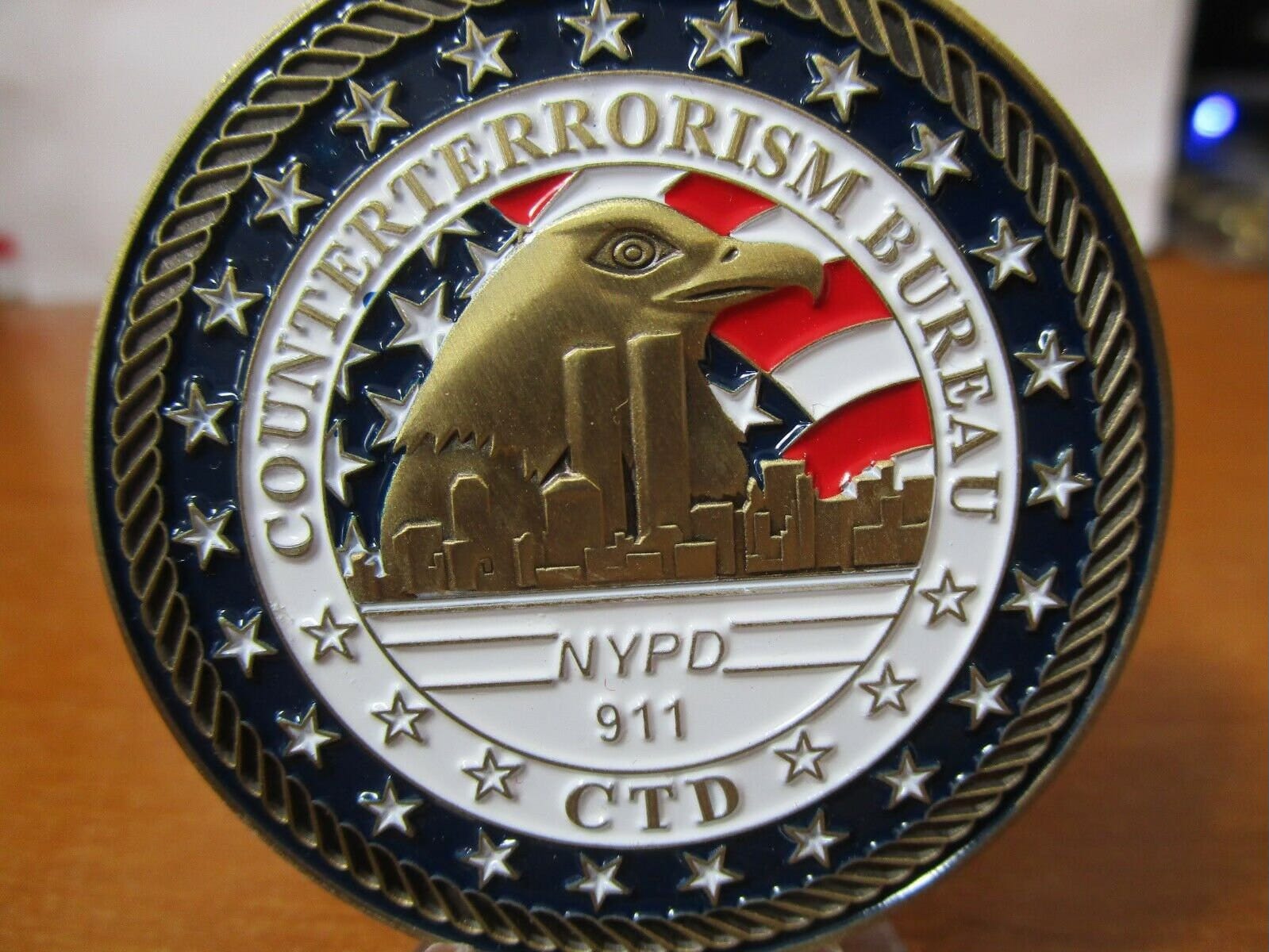
In 2023, the NYPD’s Intelligence and Counterterrorism Bureau successfully headed off several attempts by Iran’s Al Quds force to assassinate a dissident in the U.S. Known as the ICB, the unit was created months after the 9/11 attacks and recruited a 35-year CIA operations veteran, David Cohen, to lead it. Modeling it in part on the OSS, the CIA’s World War Two intelligence and sabotage service, Cohen expanded its reach well beyond New York to capitals abroad, generating criticism from the FBI and outside observers for its autonomy and lack of oversight. Relations were eventually repaired, but even today its 1500-person team, which includes analysts, investigators and undercover operatives, maintains offices in not just New York but several cities in the U.S. and 12 cities around the world. It also develops and shares intelligence with the federal level U.S. intelligence community and runs joint undercover counterterrorism operations with the FBI.
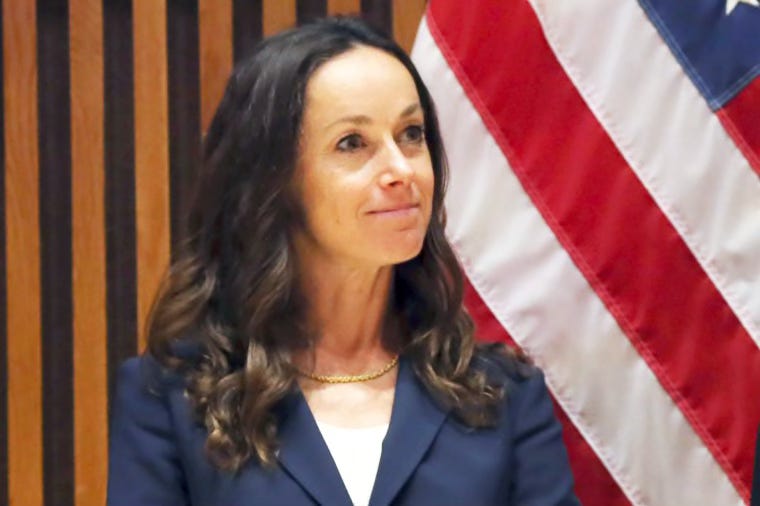
At its head since 2023 is Rebecca Ulam Weiner, a lawyer in her late 40s whose two Harvard degrees and lack of ever wearing a police uniform mark her unusual path to the senior ranks of the NYPD.
“Both my uniformed colleagues…and my Harvard Law School classmates expressed some surprise at my transition from HLS [Harvard Law School] to the NYPD,” she wrote in a 2014 law school National Security Law career guide, when she was the director of Intelligence Analysis at the ICB. “It was certainly not what I would have predicted entering law school. However, it was undoubtedly the best leap of faith I have taken.”
Swathed in Secrets
Her immersion in secrets was part of her life from an early age. Her grandfather was a Polish immigrant mathematician working at Harvard who was recruited to develop the hydrogen bomb as part of the wartime Manhattan Project. Her grandmother, a French émigré, spoke three languages and aided her husband’s work with a pen, paper and a slide rule for backend calculations. They’d met in Cambridge, Mass. after fleeing the Nazis, and their relationship flourished in the secrecy of Los Alamos, N.M., where Weiner was born. Her grandparents lived in “a world defined by secrets,” whose “very existence was classified,” she recalled in a 2024 piece in Tablet, the conservative Jewish magazine of arts, culture and criticism.
Their influence on her life, by her grandmother in particular, was significant. As a second-grader, Weiner turned in a report with a drawing of a mushroom cloud and a label that said “H-bomb.” As a teenager, she would help her grandmother “with her writing projects, learning our family history, and her secrets,” Weiner wrote in Tablet.
“Los Alamos’ blend of domestic and international, personal and professional, has always intrigued me,” she wrote. “As someone whose job it is to keep secrets, I often wonder whether such an experiment would be possible today, scientifically or socially.”
Her interest in secrets continued through her school years and beyond. After graduating cum laude from Harvard Law School in 2005, she took a national security fellowship at the Harvard Kennedy School’s Belfer Center for Science and International Affairs, where she published an extensive legal analysis on the full costs of private military contractors like Blackwater, the outfit whose operatives had killed 17 Iraqi civilians in a notorious 2007 incident known as the Nisour Square Massacre in downtown Baghdad.
Harvard to Manhattan
A year before that she’d approached NYPD Commissioner Ray Kelly at a Kennedy School conference after he had spoken about “the creation of a new cadre of civilian analysts to help identify, monitor and mitigate the threat of terrorism in New York City.” Weiner told him she wanted to work there,and by the end of the year she was an analyst under Cohen, the ICB’s founder
After four years as an ICB analyst she was selected to spend a year in D.C. as the first representative of local law enforcement in the National Intelligence Office of the still relatively new ODNI.
Then it was back to New York. The ICB had been found to be aggressively profiling and spying on NY Muslims in its zeal to investigate counter-terrorism leads, triggering lawsuits, not to mention a public relations disaster. Weiner was drafted to be the Bureau’s legal counsel, as well as its Intelligence Analysis Team Leader, and in 2012 handled negotiations with attorneys for Muslim leaders.
She got good marks for that, at least outside the NYPD. Weiner was perceived to have a “strong regard for civil liberties,” one of those attorneys told the NY Times. “She was really putting on the brakes.”
Weiner also participated in another one of the ICB’s experiments, the international liaison program. Set up by Cohen in 2003, its purpose was to gather information on terrorist attacks and send back information about tactics and techniques by deploying senior intelligence officers to cities in the Middle East, Asia, South America and Europe. Since then, the unit has evolved to adapt to conflicts like the current one with Iran and its proxies. Now NYPD officers work with local law enforcement to “confirm reports of casualties, missile strikes and damage to U.S. facilities,” according to an internal police document cited by the New York Times.
Broad Reach
Weiner was not just a team leader for the Middle East and North Africa “overseeing intelligence collection and analysis related to threats, she was a “linchpin” who “helped foreign counterparts track cells or crack cases,” according to a Vanity Fair profile.
As the ICB’s director of Intelligence Analysis from 2012 to 2016, she first started “charting Iran’s capabilities on the ground,” Vanity Fair wrote. The Bureau’s director, John Miller, recalls her crafting “this brilliant report which strung together all of these connections that, had the federal government done it, would have been highly classified. But it was all based on NYPD casework--our first clear look into what Iran was up to with Hezbollah and other operators, mapping targets in New York.”
As deputy commissioner, she saw the most likely, urgent, high-profile threats that could well stem from the Trump administration’s 2020 assassination of Iran’s Maj. Gen. Qassem Soleimani, the commander of the Quds Force. Working closely with the FBI, Weiner “helped staff and direct” the country’s largest joint terrorism task force. Intelligence, some of it from FISA-approved electronic surveillance, began to come in saying t hit men hired by Iranian operatives were active in New York and seeking to assassinate U.S. government officials. Since then, several assassination attempts or plans emanating from Iran have been foiled and or revealed, according to various reports.
Then, in an unusual coincidence in 2024, Weiner was teaching a course on “Counterterrorism and Policing” at Columbia University when large, sometimes unruly demonstrations by pro-Palestinian activists broke out, including the takeover of a campus building. The NYPD tasked her with monitoring the protests, and after an ICB investigation, the occupiers were removed by force by the NYPD.
Also unusual, for a top police official, especially in the media-bashing Trump era, Weiner is a member of the Council on Foreign Relations and married to a reporter, Bloomberg Businessweek’s Drake Bennett. Not really surprising: he recently developed a podcast on an elite Chinese counter-intelligence unit tasked with lifting valued intellectual property from companies in the U.S. and beyond. ###
I'm so happy to see really smart persons take the "leap of faith" into US govnt jobs, and police work.
It's a conclusion to my undereducated layman's life, that society really benefits from the smarties getting over into jobs that help us all.
Thanks to all the SpyTalk contributors, and all the incredible history behind all the intel world.
I love and am a late in life, retired now, layman, sucker for just the excellent ex CIA people's style of clear, to the point, writing.
Thankyou all. (Love this blog, and happy subscriber, thanks Jeff Stein for this substack, it's just excellent.)
So happy to see this article. Thank you!