

Spy Agencies Gave Trump Ample Warning of Iran Missiles, But He Evidently Ignored Them
Previously unreported damage from Iranian missiles and drones underscores accuracy of strikes, volume of arsenal, as Tehran reloads its launchers

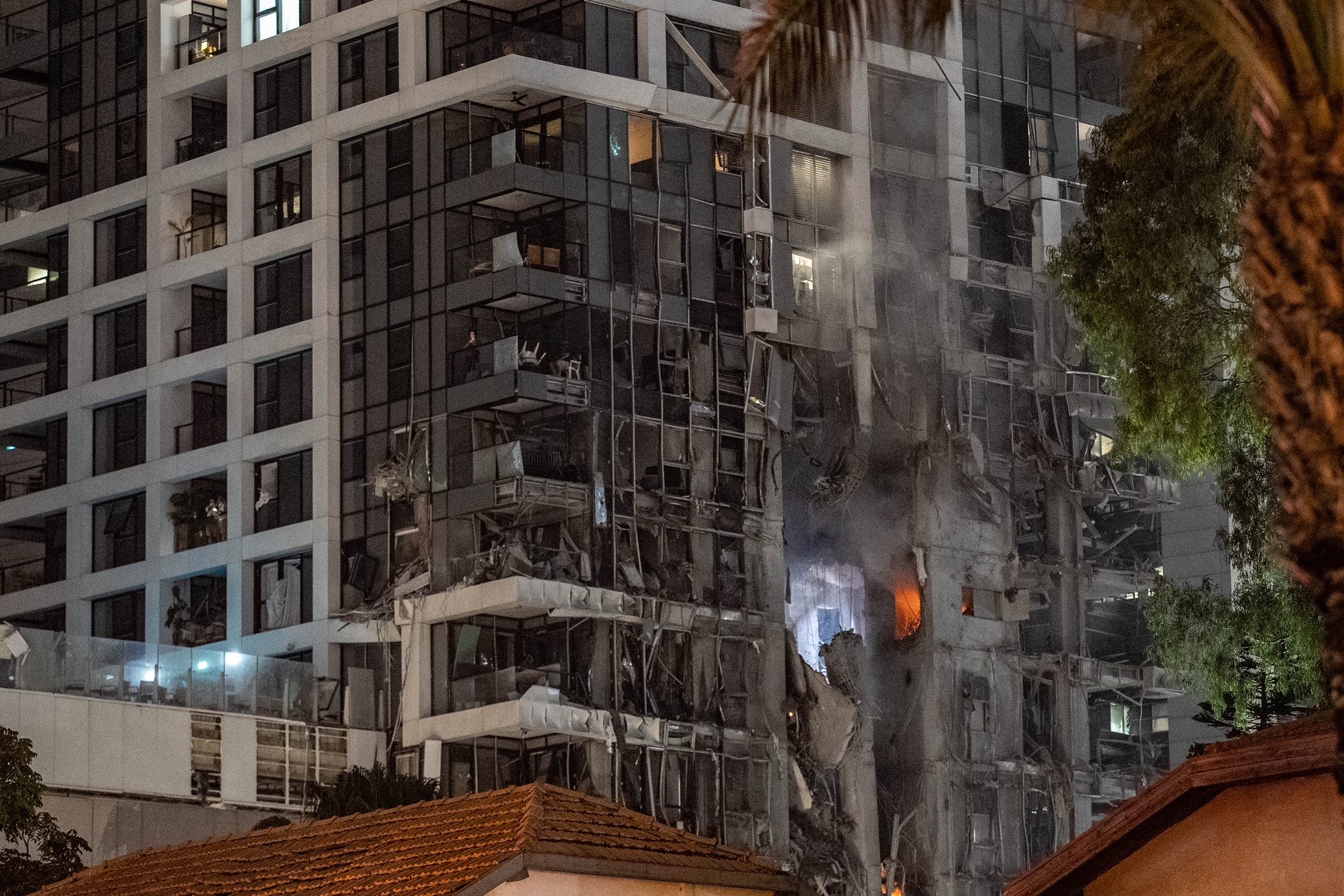
On June 13 of last year, an Iranian intermediate-range ballistic missile with a warhead containing 4,000 pounds of high explosives evaded Israel’s air defenses and scored a direct hit on the headquarters of the IDF’s air force, located in a high rise tower just outside central Tel Aviv’s Kiriya Defense Ministry complex. Jerusalem’s military censors prevented Israeli media from identifying the heavily damaged building, but two trusted sources confirmed it housed the air force headquarters.
Was it a lucky hit, or a harbinger of what was to come? Israel’s much-heralded success in knocking Iranian missiles—and drones—out of the sky during 2025’s 12-day war initially suggested the Kiriya strike may have been a fluke.
But it later emerged that Iranian missiles also had hit five Israeli military bases during that brief war, according to data published this past March by Oregon State University, which tracks bomb damage in war zones via satellites.
Those bases included the sprawling Glilot complex just north of Tel Aviv, which houses the headquarters of nearly all the services making up Israel’s intelligence community. Another was the Tel Nof air force base in the south of the country, where Israel’s squadrons of F-35 warplanes are hangared. The damage inflicted by those strikes, too, went unreported. And only in late March did The New York Times reveal the extent of destruction that Iranian missiles and drones wrought on U.S military bases in Kuwait, Bahrain and Saudi Arabia.
Those Iranian missile strikes should have cautioned President Trump on the ease with which he expected to defeat Iran. It’s not that the information was unavailable to him.
Indeed, in its 2025 Worldwide Threat Assessment, the Office of the Director of National Intelligence noted that Iran “continues to bolster the lethality and precision of its domestically produced missile and UAV systems, and it has the largest stockpiles of these systems in the region.” The threat assessment went on to note that Iran’s missiles and drones “can strike throughout the region.”
Asked if Trump had been briefed on the size and precision of Iran’s missile arsenal before going to war, Norman T. Roule, a former senior CIA officer who served as the national intelligence manager for Iran, said he had no specific information about such briefings. But he added: “U.S. military and civilian intelligence analysts would be expected to monitor closely the size, nature, and capabilities of Iran’s missile arsenal, ensuring that such assessments are immediately available to senior policymakers and warfighters when required for their planning.”
“The Trump administration grossly miscalculated who they were fighting and the enemy’s capabilities across the board,” said Thomas Joscelyn, an expert on Iran and a senior fellow at JustSecurity.org, produced by the Reiss Center on Law and Security at New York University School of Law.
Joscelyn noted what he called a “weird paradox” in the way the administration went to war against Iran. “On one hand, they thought the Iranian regime’s missile capability was so deadly and accurate that they needed to take it out,” he said. “At the same time, however, they underestimated the accuracy of the same missiles. That’s just one of the many ways in which they didn’t really game out this war correctly.”
SpyTalk repeatedly reached out to the CIA and Office of the Director of National Intelligence for comment over the weekend but received no response.
As it turned out, Iranian missiles and drones hit 13 U.S. military bases hosted by America’s Arab allies just across the Persian Gulf. While U.S.-supplied Patriot and THAAD air defense systems in the U.A.E., Saudi Arabia, Kuwait, Bahrain, Qatar and Oman shot down the majority of incoming missiles, the Iranians sent swarms of GPS-guided drones that overwhelmed their defenses. The Iranian attacks on the U.S. bases there caused significant damage to fuel facilities, aircraft hangars and communications equipment, leaving many of the bases uninhabitable, the New York Times reported. In Kuwait, a direct hit on a triple-wide trailer serving as a makeshift operations center killed six U.S. soldiers and badly wounded nine others.
The Times, quoting American officials and military personnel, said the Iranian barrages forced thousands of U.S. troops to relocate to hotels and office buildings throughout the region, where they’ve been supporting the war effort remotely. Some troops, the officials said, have been dispersed to locations as far away as Europe.
At the time, Trump said his administration was “shocked” that Iran had responded to his attacks by launching missiles and drones at neighboring Gulf Arab monarchies that are closely allied with the United States.
“They hit Saudi Arabia, Qatar, the U.A.E., Kuwait,” Trump told reporters, his tone one of astonishment. “Nobody expected that. We were shocked. They fought back!”
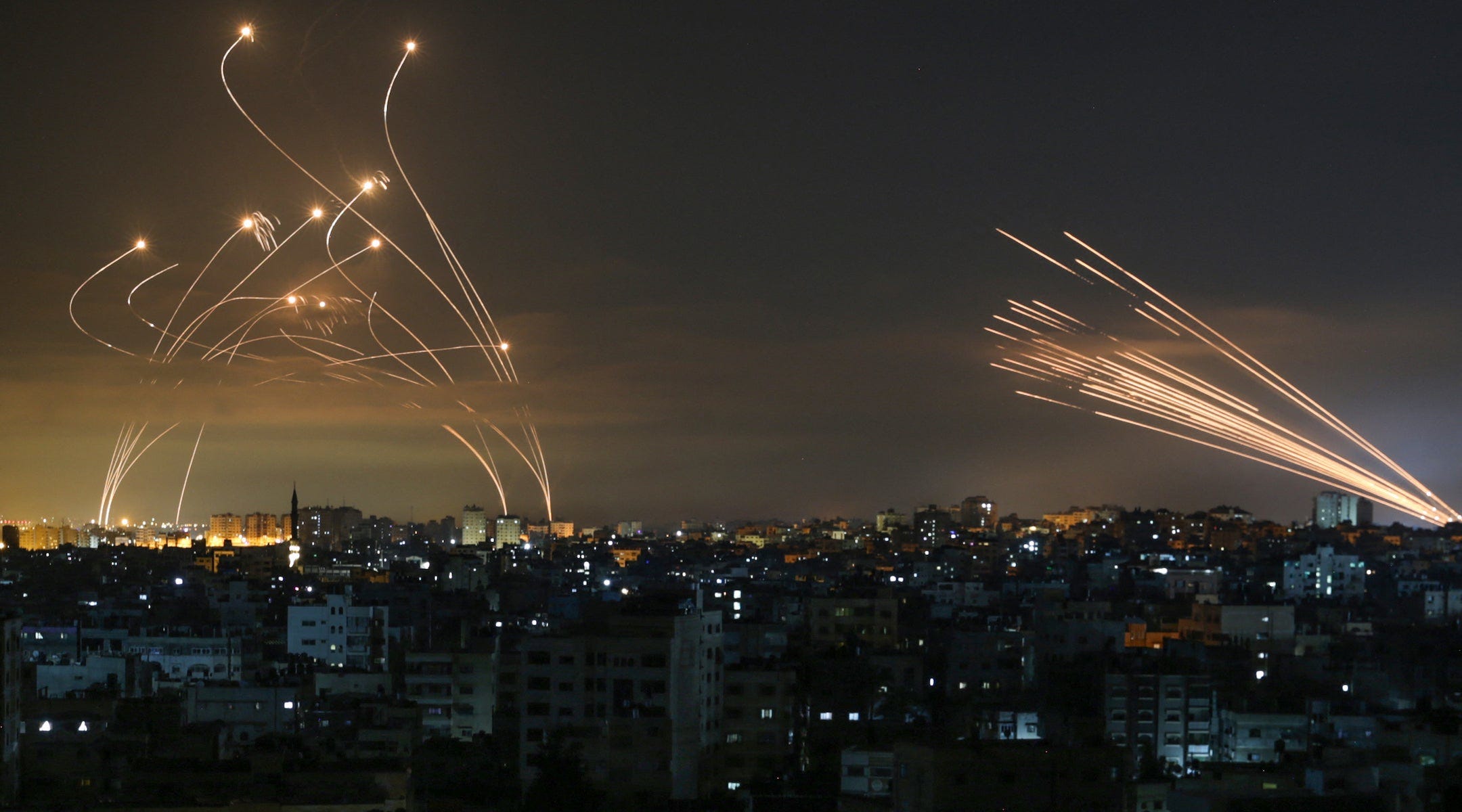
But both American and Israeli military experts, as well as former CIA officials, say the war damage to U.S. and Israeli military bases came as no surprise to them.
“The Iranians have been preparing to do this for a generation,” based on their belief that the U.S. would l eventually attack the Islamic Republic as part of a regime-change effort, said Mark Fowler, a retired CIA case officer and Iran specialist. He said Tehran’s strategy, developed as far back as 2006, was based on its belief that if Iran responded to a U.S. attack by hitting the oil-rich Gulf Arab states, they would pressure the U.S. to back down.
These experts add that the damage is also proof of an Iranian missile and drone arsenal that is not only larger and far more resilient than senior Trump officials have claimed, but also one that has shown impressive accuracy, due to Iran’s sophisticated precision guidance systems, combined with targeting intelligence from both Russia and Israeli spies recruited by Iran to provide coordinates of Israeli military bases. The result has severely undercut Trump administration claims that the Iranian military has all but been obliterated. On May 5, Iran’s Ministry of Defense announced the rollout of the Qasem Basir ballistic missile, with a range of 745 miles, which it called an upgraded version of the previously revealed Shahid Haj Qasem missile, the regime-linked Tasnim agency reported, according to the Berlin-based bne Intellinews.
Bouncing Back
Now the Trump administration is learning that Iran has used the current ceasefire to recover and repair mobile missile launchers, missile stores and missile silos that were buried after U.S. and Israeli air strikes, and could return many of them to service.
Of greatest concern to some officials is intelligence showing the Iranians have restored 30 of the 33 missile sites that guard the Strait of Hormuz, a battlefield advance that threatens both U.S. Navy ships, oil tankers and other commercial vessels that try to sail through the narrow waterway.
Iran has taken control of the strait, requiring all ships passing in or out of the Persian Gulf to coordinate their passage with the Islamic Revolutionary Guard Corps and pay a toll if permitted to pass. The IRGC has opened fire on ships that have attempted to transit the strait without its permission. In a counter move to strangle the Iranian economy, the U.S. Navy is enforcing its own blockade of Iranian ports in the Gulf of Oman and interdicting outbound Iranian oil tankers that try to evade the blockade.
The U.S. assessments, bolstered by Israeli intelligence, say that Iran still has 70 percent of its mobile missile launchers, as well as 70 percent of its missile arsenal, made up of both short and intermediate-range rockets, anti-ship missiles and cruise missiles. In 2022, Gen. Frank McKenzie, then-commander of the U.S. Central Command, told Congress that Iran had “over 3,000 ballistic missiles of various types.” A recent Congressional Research Service analysis of Iran’s ballistic missile and drone programs said the size of Iran’s missile inventory was “uncertain.”
In the first weeks of the war, McKenzie expressed a kind of relief that the damage from Iranian strikes had been less than he expected.
“Compared to what we were concerned they would be able to do, which was to volley-fire hundreds of missiles at a time, the damage has been relatively minor,” McKenzie told CBS Sunday Morning on March 15.
The administration continues to downplay the threat. Testifying before the Senate Armed Services Committee on Thursday, Adm. Brad Cooper, commander of U.S. Central Command, said the intelligence that Iran retains 70 percent of its missiles was “not accurate,” adding that more than 1,450 U.S. airstrikes on Iran’s weapons manufacturing sites had left its military with “a moderate, if not small, capability to continue strikes.”
Drone Surprise
What has surprised some Iran experts is the regime’s manufacture of thousands of one-way drones armed with powerful explosive warheads. “Their drones are pretty high-end weapons,” said Fowler, the former CIA case officer, who spent years on Iran operations. “They’re cheap, but at the same time, they’re very effective. And that’s a new development.”
As if to demonstrate their resilience, Iran nearly hit the United Arab Emirates’ nuclear-power station with a drone, authorities in the Persian Gulf state said Sunday. The weapon set off a fire at an electrical generator “outside the inner perimeter of the Barakah Nuclear Power plant,” the Wall Street Journal reported. “At the nuclear station, radiation levels were normal, and the plant—where four reactors supply 25% of the U.A.E.’s power needs—continue to operate, the Abu Dhabi media office said.”
It was a close call—and perhaps yet another warning. Still, Trump continues to insist, as he has since the first days of the war, that the Iranian military has been “decimated” and “no longer” poses a threat. Moreover, he bristles at any suggestion that Iran’s military still has fight left.
“When the Fake News says that the Iranian enemy is doing well, militarily, against us, it’s virtual TREASON,” the president said in a recent posting on his Truth Social platform, adding such reports are tantamount to “aiding and abetting the enemy.”
But Daniel Flesch, a dual U.S.-Israeli citizen and IDF veteran, now an adjunct fellow and Iran expert at The Foundation for Defense of Democracies, a pro-Israel research organization that supports the war against Iran, told SpyTalk he also “leans toward believing these intelligence assessments, versus what we’re hearing from our political leaders.”
“The real question,” says JustSecurity’s Joscelyn, “is how much are Trump’s cronies who are in charge at the top layer of the I.C. accurately reflecting the intelligence to Trump, as opposed to feeding the boss what he wants to hear.”
I hope We, The People have learned a harsh lesson, that cost people their lives unnecessarily, to never again make "reality stars," who bankrupt casinos, and come equipped as themselves with moral and ethical bankruptcy, in charge of Our Country ever again.
Well, of course he didn't listen to the experts. He thinks he knows everything. 🙄