

Spy Agencies Gave Trump Ample Warning of Iran Missiles, But He Evidently Ignored Them
Previously unreported damage from Iranian missiles and drones underscores accuracy of strikes, volume of arsenal, as Tehran reloads its launchers

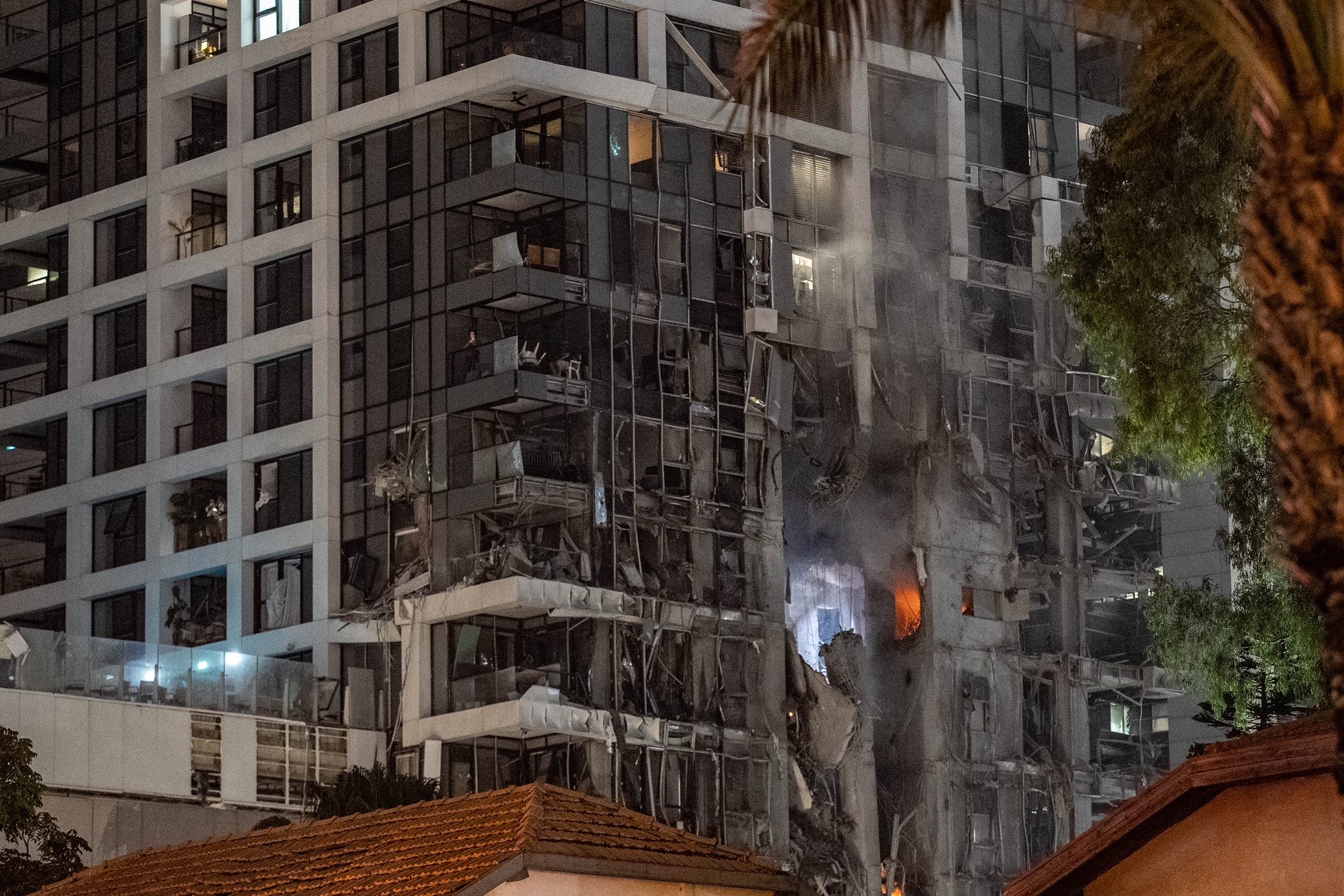
On June 13 of last year, an Iranian intermediate-range ballistic missile with a warhead containing 4,000 pounds of high explosives evaded Israel’s air defenses and scored a direct hit on the headquarters of the IDF’s air force, located in a high rise tower just outside central Tel Aviv’s Kiriya Defense Ministry complex. Jerusalem’s military censors prevented Israeli media from identifying the heavily damaged building, but two trusted sources confirmed it housed the air force headquarters.
Was it a lucky hit, or a harbinger of what was to come? Israel’s much-heralded success in knocking Iranian missiles—and drones—out of the sky during 2025’s 12-day war initially suggested the Kiriya strike may have been a fluke.
But it later emerged that Iranian missiles also had hit five Israeli military bases during that brief war, according to data published this past March by Oregon State University, which tracks bomb damage in war zones via satellites.
Those bases included the sprawling Glilot complex just north of Tel Aviv, which houses the headquarters of nearly all the services making up Israel’s intelligence community. Another was the Tel Nof air force base in the south of the country, where Israel’s squadrons of F-35 warplanes are hangared. The damage inflicted by those strikes, too, went unreported. And only in late March did The New York Times reveal the extent of destruction that Iranian missiles and drones wrought on U.S military bases in Kuwait, Bahrain and Saudi Arabia.
Those Iranian missile strikes should have cautioned President Trump on the ease with which he expected to defeat Iran. It’s not that the information was unavailable to him.
Indeed, in its 2025 Worldwide Threat Assessment, the Office of the Director of National Intelligence noted that Iran “continues to bolster the lethality and precision of its domestically produced missile and UAV systems, and it has the largest stockpiles of these systems in the region.” The threat assessment went on to note that Iran’s missiles and drones “can strike throughout the region.”
Asked if Trump had been briefed on the size and precision of Iran’s missile arsenal before going to war, Norman T. Roule, a former senior CIA officer who served as the national intelligence manager for Iran, said he had no specific information about such briefings. But he added: “U.S. military and civilian intelligence analysts would be expected to monitor closely the size, nature, and capabilities of Iran’s missile arsenal, ensuring that such assessments are immediately available to senior policymakers and warfighters when required for their planning.”
“The Trump administration grossly miscalculated who they were fighting and the enemy’s capabilities across the board,” said Thomas Joscelyn, an expert on Iran and a senior fellow at JustSecurity.org, produced by the Reiss Center on Law and Security at New York University School of Law.
