Shortwave Nazis
A new book, “GI G-Men,” recounts FBI Director J. Edgar Hoover's wartime global hunt for Nazi American propagandists.on the airwaves

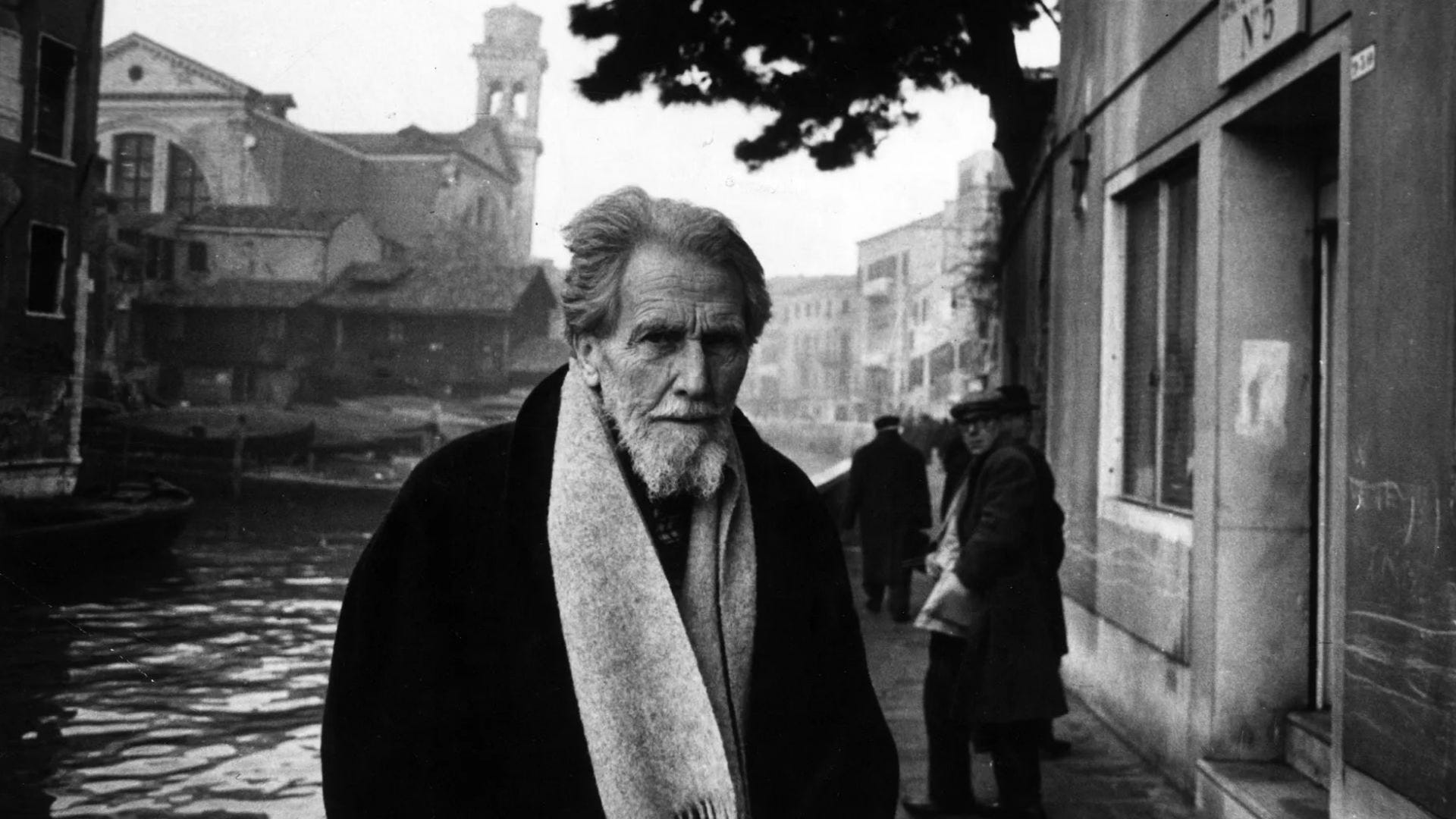
Long before the age of internet influencers, a different breed of provocateur took to the airwaves to spread disinformation. In the 1930s and 1940s, a cadre of expatriate Americans—some ideologues, some opportunists—used the radio to broadcast pro-Nazi, pro-fascist, and antisemitic propaganda back to the United States.
To FBI Director J. Edgar Hoover, these broadcasters weren’t just deluded enemy sympathizers. They were “renegades,” and he was determined to round them up for prosecution. And more: Hoover’s campaign against them was the final step in a calculated, three-phase expansion of FBI power, all orchestrated with the blessing of President Franklin D. Roosevelt.
Before the U.S. formally entered the war in December 1941, Hoover had begun cleaning house at home, declaring success in identifying and rounding up domestic Nazi spies and front organizations. With the homeland seemingly secured, Roosevelt authorized Hoover’s next ambition: the creation of the Special Intelligence Service (SIS) inside the bureau. This covert arm was tasked with tracking Nazi influence across South and Central America, effectively giving Hoover his first international fiefdom.
As the Allies turned the tide in late 1943, Hoover won the ultimate prize. Amid his bitter, ongoing turf war with William “Wild Bill” Donovan and his newly minted Office of Strategic Services (OSS), a forerunner of the CIA, FDR authorized the FBI to enter the European theater. Hoover dispatched a handpicked team of agents—dubbed the “Army Liaison Unit”—to follow Allied liberators into France and Italy. Their mission was to track down treasonous expatriate collaborators and broadcasters on Hoover’s hit list.

This little-known mission is the subject of G.I. G-Men: The Untold Story of the FBI’s Search for American Traitors, Collaborators, and Spies in World War II Europe, by historian Stephen Harding. A prolific writer on defense and military issues, Harding offers an encyclopedic account of the more than 20 FBI special agents eventually seconded to Europe. Among them were Fred Ayer and Don Daughters, two gumshoes who found themselves navigating a chaotic landscape. “Though monumental battles were still raging,” Harding writes, “the two G-men had been dispatched to Europe to begin what Hoover believed to be an essential part of the ‘end phase’ of the war in Europe.”
The Hunt
Always cautious to keep close counsel with Hoover back in Washington, Ayer and Daughters found that their assignment was easier in theory than in practice. Their suspects would come to include not just broadcasters, but also “the associates, relatives, and even lovers of senior U.S. political or military figures, including an erstwhile confidant of former president Theodore Roosevelt.”
They captured a number of suspected turncoats. However, the reality of these manhunts might encourage a reader to wonder about the value of the victories.
Take the case of Special Agent Frank Amorim, an Italian-American FBI lawyer given the singular task of tracking down the poet Ezra Pound in fascist Italy. Pound had spent years delivering untethered diatribes against FDR, Jews, and American democracy, mostly via shortwave from Italy. But by the time Amorim arrived in May 1945, Pound was hardly a fugitive mastermind. He was living openly in Sant’Ambrogio with both his wife and mistress in the same house, a “nowhere man” waiting for the end.
Harding describes Amorim being overwhelmed by the task, calling for reinforcements from Washington as if cornering a major saboteur. In reality, it was a comedy of errors: Pound tried to turn himself in but couldn’t find any American soldiers interested enough to arrest him. He was finally picked up by Italian partisans who delivered him to a U.S. Army unit. A long detention followed before Pound was flown back to the United States, where—as was perhaps obvious all along—he was found mentally unfit for trial and committed to St. Elizabeths Hospital for the insane in Washington, D.C., where he spent the next 12 years.
Contemporaries, however, long knew that Pound was more of a fool than a threat. “The broadcasts are absolutely balmy,” wrote Ernest Hemingway in a 1943 letter to fellow writer Archibald MacLeish. “He is obviously crazy. He deserves punishment and disgrace but what he really deserves is ridicule.”
In his sane moments, Pound acknowledged he had been broadcasting propaganda paid for by the Italian government. Yet his broadcasts had virtually no listenership; his rambling, intellectual diatribes could hardly be deciphered on the static-filled shortwave transmissions monitored by the employees of the U.S. Foreign Broadcast Monitoring Service who built the case against him.
Furthermore, the very idea that Pound was corrupting the American public ignores the technical reality of 1940s radio. Upon the U.S. entry into the war, the government had banned all amateur ham radio transmissions to prevent their use by enemy agents. While listening was still legal, the only Americans with the complex equipment and patience to pull Pound’s weak, wavering signal out of the atmospheric static were dedicated technology hobbyists. These shortwave listeners were typically patriotic tech-geeks tuning in for the challenge of catching a distant signal (”DX-ing”), not to be converted to fascism by a confusing poet. The mass audience Hoover feared simply did not exist.
Weak Cases
If the pursuit of Pound was overwrought, the case of Francis Warrington Dawson II was just as flimsy. Harding details how agents Ayer and Daughters built a case against Dawson despite the fact that he had accompanied Teddy Roosevelt on an African safari in 1909 and served as the former president’s private secretary on that journey. A former U.S. diplomat and WWI veteran living in Versailles, Dawson, the son of a U.K.-born Confederate Army volunteer, was undeniably a collaborator who had broadcast for the Nazis. But he was also an aged, wheelchair-bound invalid whose treason was more theoretical than practical. Evidence indicated he had recruited other Americans to produce propaganda, but tracking him down required less detective work than elder care. In the end, U.S. officials did not file charges against Dawson, on grounds of insufficient evidence. Like Pound, he was a symbol of betrayal, but functionally irrelevant to the war effort.
Pound tried to turn himself in but couldn’t find any American soldiers interested enough to arrest him. He was finally picked up by Italian partisans who delivered him to a U.S. Army unit.
Harding presents some elements of the story as a high-stakes procedural, a World War II Dragnet where brave agents hunt down dangerous fugitives. But readers may find themselves asking: Was this mission actually worth the effort?
The disconnect is glaring when one considers how Hoover handled threats to America back home. While he squandered resources on hunting a mad poet and a wheelchair-bound former diplomat in Europe, the Justice Department let a far more dangerous domestic propagandist, Father Charles Coughlin, slide without indictment. As Harding notes, at the height of his popularity, the antisemitic, pro-Nazi priest had a weekly AM radio audience of 30 million listeners. And yet, despite gathering years of evidence of treason against Coughlin, the government never charged him with a crime.
This suggests that the true driver of the story wasn’t justice, but power. The plain vanilla FBI agents in Harding’s book seem terrified of upsetting their boss, and for good reason. They were foot soldiers in Hoover’s obsession with upstaging Donovan. Any foot dragging could earn them an assignment to Nowheresville, Texas.
To his credit, Harding does document many cases where the FBI’s persistence paid off. There was the successful prosecution of Douglas Arnold Chandler, an American freelance journalist who broadcast treasonous diatribes for the Nazis under the name “Paul Revere.” Unlike the shortwave-only broadcasters, Chandler could be heard on AM bands in Europe by American GIs, making him a genuine menace. He was eventually sentenced to life imprisonment.
Even more devious was Herbert John Burgman, a Minnesota-born former U.S. embassy employee in Berlin who adopted the persona “Joe Scanlon.” He broadcast from “Station Debunk,” claiming to be operating a secret transmitter inside the United States, portraying himself as a leader of a domestic resistance movement. In fact, he was broadcasting from Berlin, apparently using powerful directional transmitters which the Nazis designed to simulate a local signal, in an effort to sow discord in the United States. Ayer and Daughters tracked Burgman down, and he was convicted of 69 counts of treason.
These successful prosecutions, among many others, demonstrate that the FBI’s mission was not in vain, and that Hoover didn’t entirely lose the turf war.
At the height of his popularity Father Charles Coughlin had a weekly AM radio audience of 30 million listeners. And yet, despite gathering years of evidence of treason against him, the government never charged him with a crime.
Solid Research
Harding’s work is a tremendous feat of scholarship, offering an exhaustive account of the FBI’s European operations. He documents the mission through dozens of individual vignettes, a structure that makes the book an invaluable resource for future researchers. While this sheer density of detail may feel overwhelming to a casual reader, it ensures that G.I. G-Men will stand as the definitive record of Hoover’s attempt to police the continent.
In the end, it became evident that rivalries with military officials and with Donovan became too much for Hoover to manage. He shut down his FBI Army Liaison Unit on Oct. 2, 1945, five months after V-E Day and a month after the formal end of the war in the Pacific. But this was not a total loss for Hoover, Harding says. By winning the right to maintain FBI liaisons in U.S. embassies worldwide, Donovan’s effort to “totally banish the FBI from liberated Europe did not succeed.”
Still, though, this feels like a generous interpretation of a strategic defeat. While Hoover managed to keep a foot in the door by stationing FBI attachés at U.S. embassies, he lost the house. Donovan’s OSS morphed into the CIA, forever ending Hoover’s dream of leading a single, FBI-run global intelligence service.
Harding has written a capable history of the men who chased down the renegade influencers of an earlier age, but the reader is left with the impression that while the G-Men won their skirmishes, their director lost the war. ###
SpyTalk Contributing Editor Peter Eisner is an award-winning reporter and editor, formerly at The Washington Post, Newsday, and The Associated Press. He is the author of a nonfiction trilogy about World War II: The Freedom Line, The Pope’s Last Crusade, and MacArthur’s Spies.


Great review/story. I never knew so much about Pound, but I know the horror of J. Edgar Hoover.
Sounds interesting enough to add to my book list. Thanks.