

Our Man in Gaza
Maj. Gen. Jasper Jeffers Has a Mission Impossible Problem

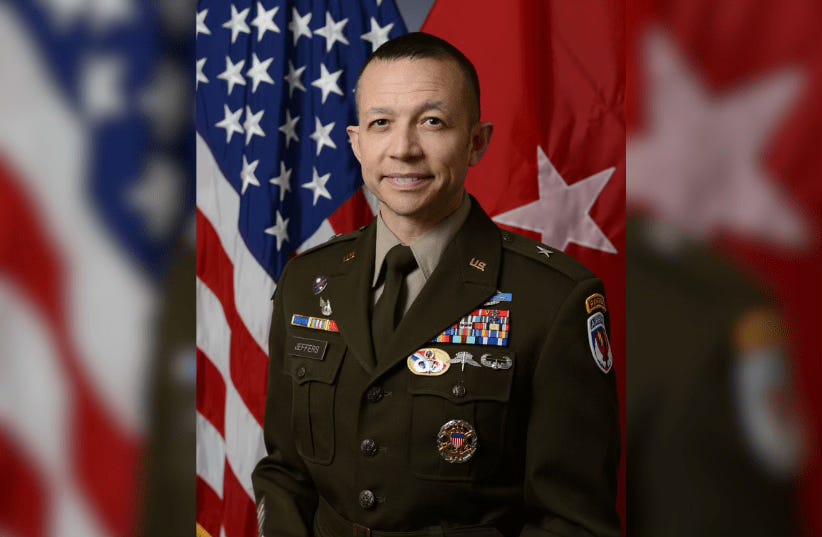
WITH THE GUNS MOSTLY QUIET IN GAZA and Washington pivoting to “the day after,” the United States has quietly assumed ownership of one of the most confounding national security problems since Vietnam. This is not a war story. It is a system failure story. It explains why Gaza has defeated every American administration since Harry Truman first confronted the question of Israel, Palestine, and U.S. responsibility for the territory in the ruins of World War II.
With a real ceasefire elusive but the political endgame accelerating, Gaza has entered the most perilous phase of the Israeli-Hamas war. The hostages are gone. A fragile ceasefire framework is in place. And the United States is now shaping what comes next through an international stabilization force led by a veteran American special operations commander. History suggests this is precisely the moment when wars unravel. Decisions made now about security, governance, borders, and coercive authority will determine whether Gaza settles into a brittle, managed calm or slides back into renewed chaos, with consequences that will reach far beyond the strip itself.
This assessment explains why Gaza is not a solvable military problem, how hostage-taking, leadership decapitation, media warfare, and lawfare have fused into a single coercive system, and why international stabilization efforts repeatedly fail when they collide with political realities Gaza does not share with the modern Westphalian state system.
