

New in SpyWeek: Trump & the 'Spy Sheikh,' Noem Protégé's Cyber Breech, MI6 Chief Takes Secret War to Russia, and More
Also new this week: Enemy spy unmasked in Kyiv, a Steele Dossier tidbit, a Chinese espionage wrinkle, and Tulsi in Georgia

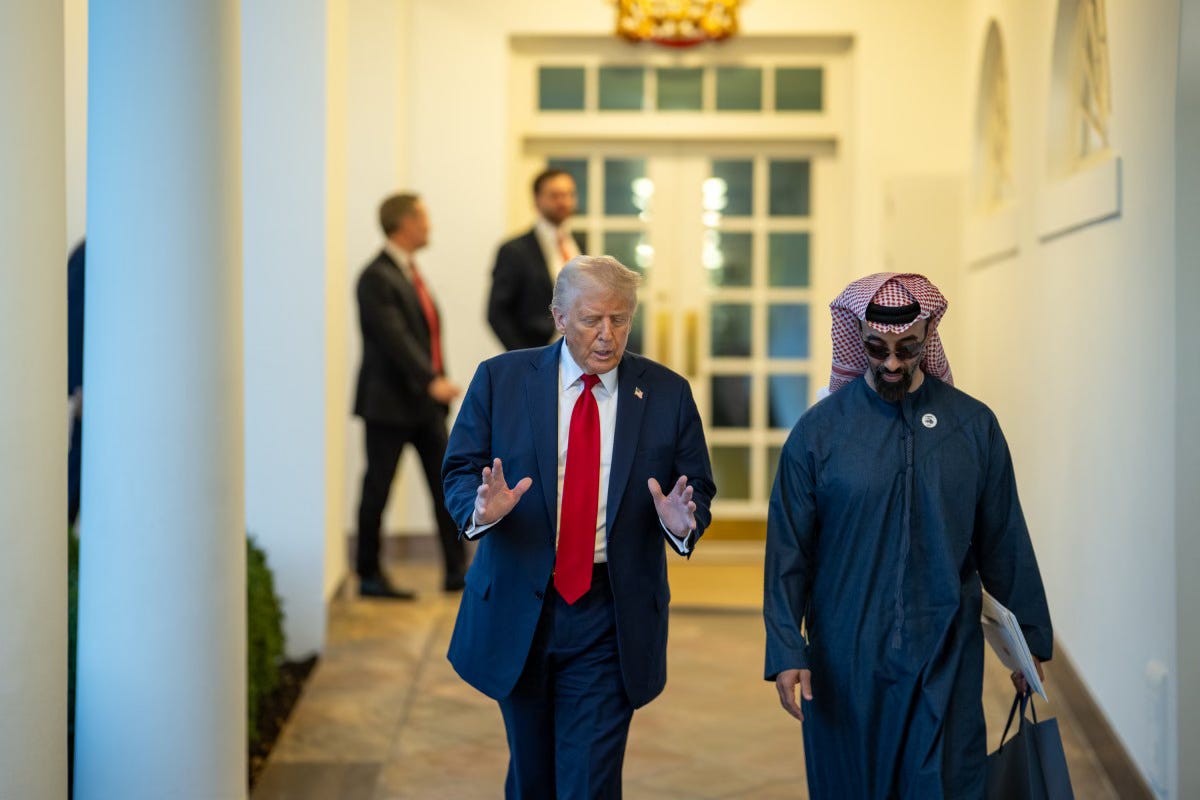
Spy Sheikh Sleeze: A secret cryptocurrency deal that netted Trump family entities and Middle East envoy Steve Witkoff nearly $500 million, almost 40 per cent up front four days before the 2024 election, was engineered by an Abu Dhabi royal known as the “spy sheikh,” according to the Wall Street Journal. Led by Sheikh Tahnoon bin Zayed Al Nahyan, “brother to the United Arab Emirates’ president, the government’s national security adviser, as well as the leader of the oil-rich country’s largest wealth fund,” the royals had been pushing for access to tightly guarded U.S. A.I. chips, which the Biden administration had rebuffed, fearing they would be shared with China. Last May, six months after the secret deal, in which the royals purchased a 49% stake in World Liberty Financial, the Trump’s fledgling cryptocurrency venture, the president greenlit the chips sale. “The deal marked something unprecedented in American politics: a foreign government official taking a major ownership stake in an incoming U.S. president’s company,” the Journal said.
Noem Call It Treason: The acting head of the Cybersecurity and Infrastructure Security Agency, a Kristi Noem protégé from her days as governor of South Dakota, set off multiple system alarms last summer when he “uploaded sensitive contracting documents into a public version of ChatGPT,” Politico reported on Tuesday, citing “four Department of Homeland Security officials with knowledge of the incident.” It added: “The apparent misstep from Madhu Gottumukkala was especially noteworthy because [he] had requested special permission from CISA’s Office of the Chief Information Officer to use the popular AI tool soon after arriving at the agency this May, three of the officials said.” None of the documents was classified above the “For Official Use Only” level, Politico reported, but they included CISA contracting documents considered sensitive and not for public release. Last December, Politico also reported that Gottumukkala had requested access to a controlled access program—an act that would require taking a polygraph—in June. Gottumukkala failed the polygraph in the final weeks of July.
