Maduro's Trial: What to Look For
The 1990 prosecution of Panama's Manuel Noriega offers a roadmap filled with dicey witnesses and get-out-of-jail cards
If the Trump administration’s game plan for Venezuela mirrors the 1989 capture of Panama’s Gen. Manuel Antonio Noriega, don’t expect a speedy trial for deposed dictator Nicolás Maduro—nor an easy outcome.
With Panama as a guide for how the U.S. Justice Department will proceed, officials are likely already reaching out to convicted drug dealers and former co-conspirators willing to testify against Maduro.
In the Noriega case, two dozen traffickers testified in return for plea bargains. These deals were criticized as “get-out-of-jail cards” issued to criminals who, in many cases, had never met Noriega nor possessed firsthand knowledge of his activities. The question now is whether the potential witnesses against Maduro have the convincing, direct knowledge needed to persuade a jury of the dictator’s guilt. Despite deep flaws in the government’s case against Noriega, a Miami jury overcame hours of a deadlock to convict him after a year-long trial in June 1992..
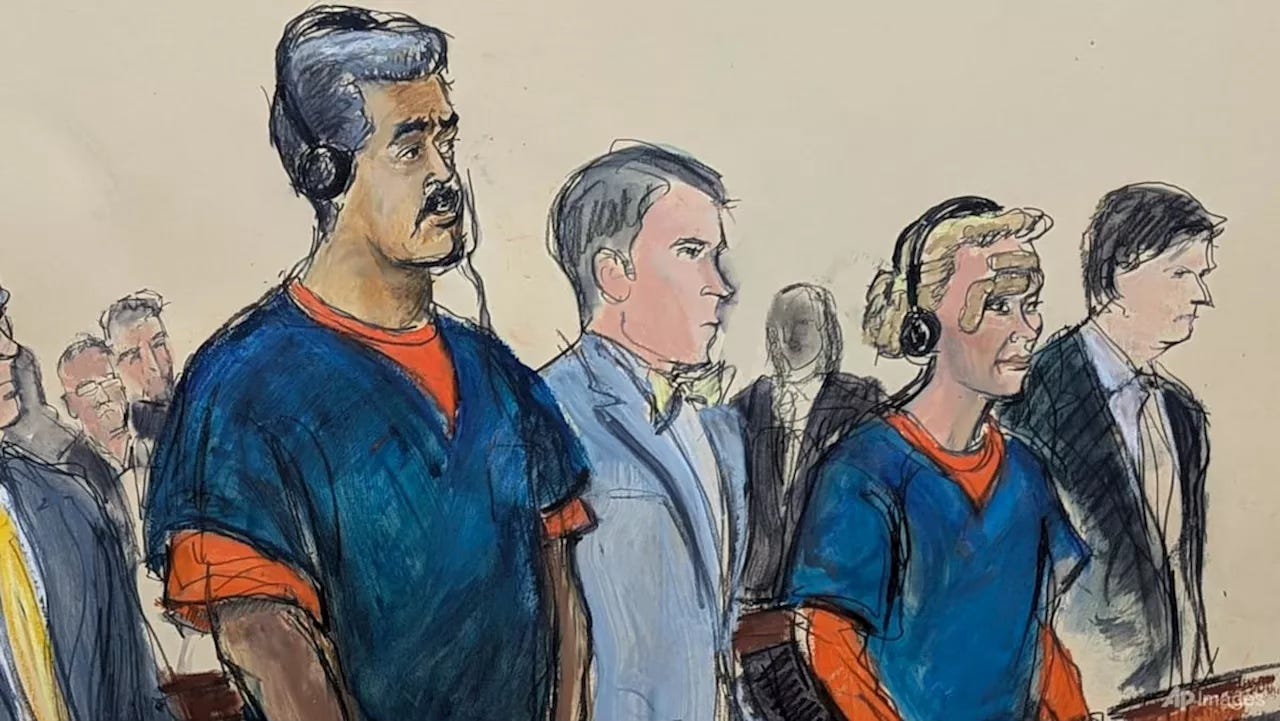
The Jan. 3 U.S. military assault on Caracas, culminating in the capture of Maduro and his wife, Cilia Adela Flores, took place 36 years to the day after Noriega was seized and flown in chains to the United States.
Certain elements of the Noriega trial in Miami serve as a roadmap for the case against Maduro. Months of pre-trial motions preceded the start of Noriega’s trial, where he faced 10 counts of drug trafficking and conspiracy. Proceedings began in April 1991 and lasted seven months. He was sentenced to 40 years and eventually served 17 after a sentence reduction. He was also extradited temporarily to France and convicted of money laundering before being sent back to Panama, where he died under house arrest in 2017 at the age of 83.
Under similar circumstances, Donald Trump would still be serving as president two years from now when a federal jury in New York finally considers whether Maduro is guilty of four counts of narco-terrorism, cocaine trafficking, conspiracy, and possession of “machine guns and destructive devices.” If convicted, the Venezuelan dictator could face a sentence of at least 30 years, matching Noriega’s.
Immunity Plea
Legal experts predict an early motion from Maduro’s defense claiming immunity as a sovereign head of state. That is unlikely to succeed. The Trump administration does not recognize Maduro as the legitimate president of Venezuela. Although he has held office since 2013, Maduro’s 2024 election victory claim is widely considered fraudulent, with the U.S. previously recognizing opposition leader Edmundo González as the actual winner. (Trump evidently has no plans, however, for turning over the government to González.)
Noriega made the same immunity claim before Miami federal Judge William M. Hoeveler in 1990. Hoeveler ruled against him—not because heads of state lack immunity, but because the United States did not recognize the military dictator’s legitimacy.
When the Maduro case finally goes to trial, the government will need more than testimony from FBI and DEA agents. Prosecutors will seek co-conspirators who can confirm the indictment’s specific claims.
It is unclear who is available to testify. Many key figures, such as Maduro’s son, Nicolás Maduro Guerra, and Interior Minister Diosdado Cabello, are not in U.S. custody. It is conceivable that others listed in the indictment—such as Ramón Rodríguez Chacín, a former justice minister, or Héctor Rusthenford (“Niño”) Guerrero Flores, a convicted trafficker said to run the Tren de Aragua gang from prison—would testify in return for amnesty or a clean slate.
However, there are several former members of the Maduro government already in U.S. prisons who could become key prosecution witnesses:
Hugo “El Pollo” Carvajal: The former head of Venezuelan Military Counterintelligence was extradited to the United States in 2025. He pled guilty to drug trafficking and narco-terrorism charges in a rumored cooperation deal.
Clíver Alcalá Cordones: A former Venezuelan army major general currently serving a 21-year sentence for providing support to the FARC, the Colombian guerrilla group that conducts illicit operations inside Venezuela.
If it sounds implausible that major drug lords would break their silence to turn state’s witness, the Noriega case again provides guidance. In 1991, the Justice Department spared no effort to guarantee a conviction. The testimony of one of their first “super witnesses,” convicted drug pilot Floyd Carlton Caceres, was surprisingly weak and did not jibe with details provided by other witnesses. While he claimed Noriega was protecting his cocaine flights, the one time Noriega’s military spotted him at a clandestine airstrip, he was immediately arrested.
Another star witness, Carlos Lehder Rivas, a leader of the notorious Medellín Cartel, contradicted Carlton, saying that the drug shipments went directly to Panama’s international airport. Lehder, a dual German-Colombian citizen, was a professed neo-Nazi who had once threatened to kill American judges. In return for uncorroborated hearsay testimony that Noriega had made a deal with the cartel for 5 percent of their profits, Lehder received a DOJ lifeline. His sentence—originally life plus 135 years—was reduced to 55 years.
Lehder ultimately served 33 years, but he was transferred from a maximum-security lockup to a witness protection wing where his family was allowed to join him. He was released in 2020 and deported to Germany.
Hearsay Evidence
Beyond the enticements of plea bargains, the government held a distinct built-in advantage in the Noriega case and will wield the same weapon against Maduro. Under federal rules of evidence, prosecutors are permitted to introduce hearsay statements made by co-conspirators (like Lehder) as evidence. Defense attorneys, however, are generally barred from using similar hearsay to exculpate their client.
The result is a tilted playing field. However, Maduro’s attorney, Barry J. Pollack, is an experienced litigator who successfully defended the federal conspiracy case against Julian Assange. Pollack represented the WikiLeaks founder for a decade before negotiating a plea deal in which Assange pled guilty to violating the Espionage Act and was released for time served.
Depending on the strength of the evidence and the quality of the witnesses, Pollack could conceivably recommend a plea deal in this case as well.
A plea deal was not in the cards for Noriega, who protested his innocence to the end. His only avenue for leniency was his history as a CIA asset who had helped the agency manage the wars in Central American and served as a backchannel to Fidel Castro.
During a 1999 sentence reduction hearing, Donald Winters, the former CIA station chief in Panama, testified in Noriega’s defense and asked for his early release. “The government cannot have it both ways,” Winters told the court during a sentence reduction hearing. “They cannot use a man as an asset for twenty years, extract every ounce of value from him, and then pretend those years of service never happened when it’s time for sentencing.”
Noriega spent the rest of his life seeking parole, a ghost of a bygone era. Maduro now faces that same vanishing point. The “Noriega Playbook” was effective enough to put the general in prison for the rest of his life; the only question remaining is whether it is strong enough to keep Maduro there now.
SpyTalk Contributing Editor Peter Eisner reported from Venezuela, Panama, Mexico and throughout Latin America for The Associated Press and Newsday. He interviewed Gen. Manuel Antonio Noriega for Noriega’s memoir, America’s Prisoner. The book includes Eisner’s independent fact-finding in the case.