Is Putin Really in Danger of Being Overthrown?
Former CIA Russia hand Sean Wiswesser and others see coup rumors as overblown

Ever since Vladimir Putin first became president of Russia more than a quarter century ago, biographers and journalists have never failed to take note of his roots as a young KGB agent based in East Germany.
But in recent weeks, amid rumors of coups and mounting dissent over his war in Ukraine, Putin has doubled down on his Soviet past, reaffirming his allegiance to the ruthless traditions of his one time employer.
A case in point: Just two weeks ago, Putin signed a decree renaming the training academy of the FSB, one of the security agencies that replaced the KGB, after one of the most feared Russian intelligence officials of all: “Iron” Felix Dzerzhinsky.
A Polish nobleman turned Bolshevik, Dzerzhinsky emerged after the 1917 revolution as Vladimir Lenin’s intelligence chief, founding the Cheka, forerunner of the KGB, and presiding over what became known as the Red Terror, a crackdown against suspected “counter revolutionaries” that involved mass arrests, torture and the executions of more than 140,000 Russians. (Putin, explaining the name change, said it was due to Dzerzhinsky’s “outstanding contribution to ensure state security.”)
There is only one way to read this move, says Sean M. Wiswesser, a former longtime clandestine operative for the CIA who specialized in Russian affairs and is the author of the new book, Tradecraft, Tactics and DirtyTricks: Russian Intelligence and Putin’s Secret War.
“It shows that the gloves are off for the Russian security services—no more pretense. We’re going back to old style,” Wiswesser said on the SpyTalk podcast.
More than a hundred years ago, Lenin told Dzerzhinsky, “You can’t have revolution without terror. We have to terrorize the people in order to keep them in line,” noted Wiswesser.
Putin has resurrected the Dzerzhinsky worldview about how to wield and maintain power, using the FSB and its sister agency, the SVR, to terrorize political opponents and assassinate the most meddlesome ones, said Wiswesser. He’s also not been shy about murdering (or attempting to murder) Russian defectors abroad.
“These are his attack dogs,” he said. “These are ruthless thugs that killed the likes of journalists like Anna Poliksovskaya and [opposition leader Alexei] Navalny.”
By reviving the ghost of Dzerzhinksy, Putin is sending a message: “This is our guy, Iron Felix. He’s the emblem of how we want to rule.”
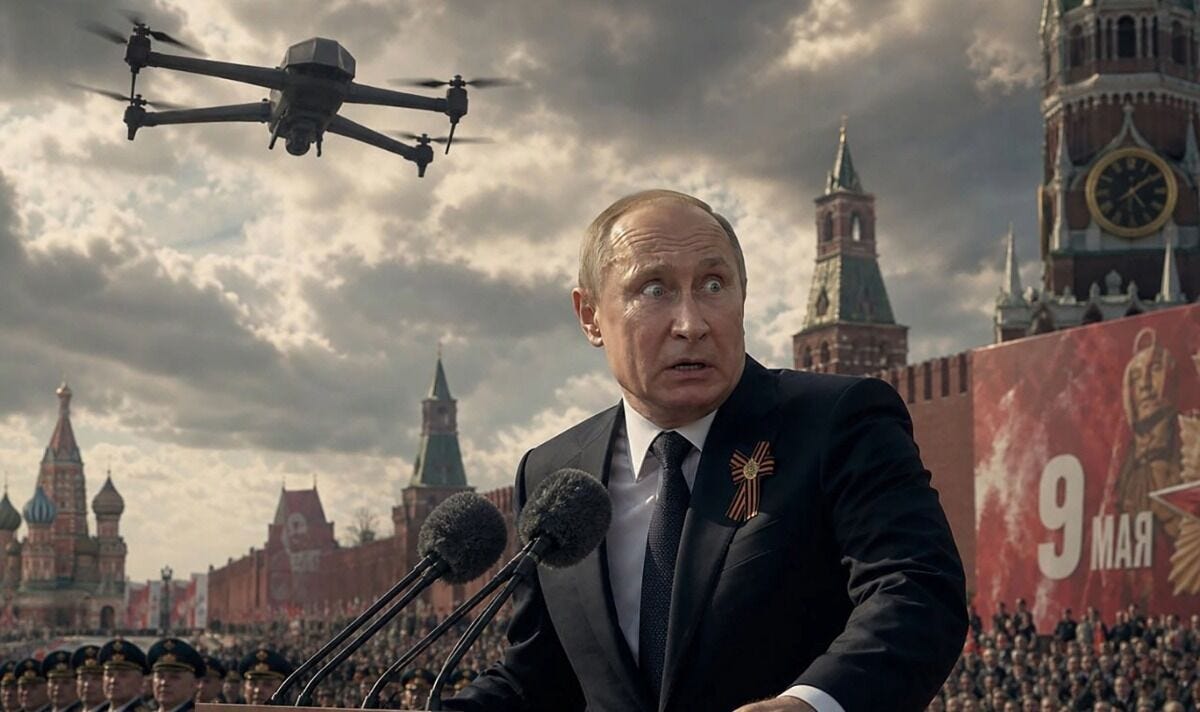
Wiswesser’s take on Putin and his relationship with the FSB causes him to be more than a little skeptical about the rumors swirling in Moscow about a rift in the Kremlin that could lead to a coup that deposes the Russian autocrat. The chatter gained some new traction this week with the leak of a European intelligence report describing a “high alert” inside the Kremlin about “the risk of a plot or coup attempt against the Russian president,” adding that Putin in particular “fears the use of drones for a possible assassination attempt by members of the Russian political elite.”
More than a hundred years ago, Lenin told Dzerzhinsky, “You can’t have revolution without terror. We have to terrorize the people in order to keep them in line.”
A separate account by the Washington Post’s Catherine Belton reported that Putin is spending much of his time these days in underground bunkers out of fear of a Ukrainian drone attack. She also chronicled the evolution of Ilya Remezlo, a longtime Kremlin propagandist and blogger who has turned fierce critic of Putin, demanding that the president resign and be brought to justice as a “war criminal and a thief.” (In time-honored Soviet tradition, Remezlo was committed to a psychiatric hospital —but then uncharacteristically released after 30 days.)
In Wiswesser’s view, however, talk of a possible coup that might threaten Putin’s grip on power is overblown—precisely because of the Chekist ethos that lives on inside Putin’s security agencies.
Control Issue
“The bottom line is that the security services are still firmly in control of Russia— the FSB in particular and its sister services,” he said. “I think that any discussion of Putin being replaced or any real discussion of coups or overthrowing him or popular dissent against him, I think that’s all fantasy for the most part.” (A similar view was echoed this week by veteran Kremlin watcher Mark Galeotti.)
The more likely scenario is that the FSB will impose an “an ever firmer crackdown,” building on repressive steps such as tightening controls over access to the Internet — purportedly to prevent “terrorist attacks.”
It could even lead to a resurrection of an old Stalinist tactic—the manufacture of a so-called “false flag” attack, or threatened attack, to justify renewed repression. All eyes are on Saturday’s Victory Parade—an annual celebration of the Soviet Union’s triumph over Nazi Germany, in which Moscow typically shows off its latest military hardware but this year has been drastically cut back due to a fear of Ukrainian drones. Any signs of an attack or coup plot would almost certainly prompt a crackdown.
But whether or not Putin uses threats against Victory Day to justify yet more repression, Wiswesser says there is no doubt that the FSB will tighten its grip and escape any responsibility for an unpopular war it played a key role in planning.
“There’s no accountability. There’s never going to be a Ukraine Commission in Russia,” he said, referring to the international group in Geneva monitoring Russian war crimes in the conflict. “So all [the FSB] gets is more resources, more money to waste for more corruption…They’re beholden to Putin completely, all of their wealth, all their power, all of their influence.”
And it should come as no surprise if Putin takes one more symbolic move. In 1991, as the Soviet Union collapsed, a statue of Dzerzhinsky outside the Lubyanka, the notorious Moscow prison where the KGB tortured and executed dissenters and accused spies, was torn down. The statue, or a replica, reemerged three years ago outside the headquarters of the SVR, Russia’s foreign intelligence agency, in a remote district southwest of the capital.
But the Lubyanka still stands, and now what Wiswesser and other close observers are waiting to see is whether Putin moves Iron Felix back into its original location in the heart of Russia’s capital, a towering, forever symbol of brutality and repression. ###
The SpyTalk podcast appears free on Friday afternoons on the RedCircle platform or wherever you like to listen. It’s available everywhere.


My book of Mr. Wiswesser's arrived today. It's already helping me piece some parts together about my life. I also just posted about Russia and Israel's past.
As always, a wonderful, concise offering.