

Iran’s Mighty Missile Threat Falls Flat
Tehran’s surviving leaders are betting they can wait out U.S. and Israeli air attacks

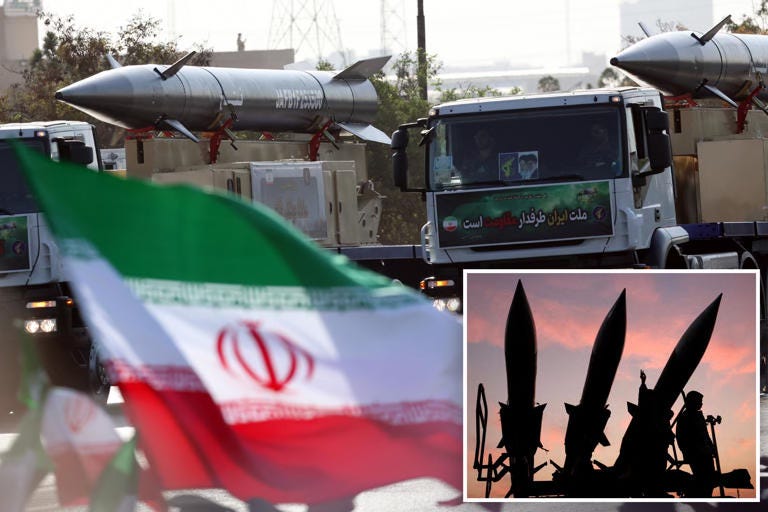
For months, the Iranians had warned that if the United States and Israel launched major attacks that sought to bring down the Islamic Republic, they would unleash their arsenal of 3,000 missiles and countless drones, striking U.S. military bases across the Middle East and plunging the entire oil-rich region into a war that would devastate the global economy..
But the threat of Iranian missiles not only failed to deter the joint U.S.-Israeli attack, but once the war began last Saturday, their counter strikes also have failed so far to knock out any U.S. bases. (In the war’s early hours, two unmanned Iranian drones did manage to strike a command center in the Port Shuaiba U.S. military base in Kuwait, killing six U.S. soldiers and wounding nine others, the only American casualties so far in the fighting. A drone also hit the U.S. Navy’s Fifth Fleet headquarters in Manama, Bahrain but caused little damage.)
Indeed, so far the vast majority of Iran’s missiles and drones, including those that were heading toward major oil and gas installations in Saudi Arabia, UAE, Kuwait, and Qatar, have been destroyed in mid-air, intercepted by American, Israeli and allied Arab air defenses. Other missiles or drones that have evaded the interceptors in the Gulf monarchies have struck civilian targets, including airports, seaports, hotels and data centers, turning would-be neutral neighbors like Saudi Arabia, United Arab Emirates, Kuwait, Qatar and Oman against them.
But others argue that Iran’s strategy of missile and drone attacks, including those by proxies in Iraq and Lebanon, on more than a dozen countries stretching from the Persian Gulf to the Eastern Mediterranean shows that President Trump and Israeli Prime Minister Benjamin Netanahu have started a war that is spinning out of control.
