


While U.S. intelligence and national security officials have been laser-focused in recent weeks on Venezuela and Iran, they just got a powerful reminder that it might be time to pay some attention elsewhere.
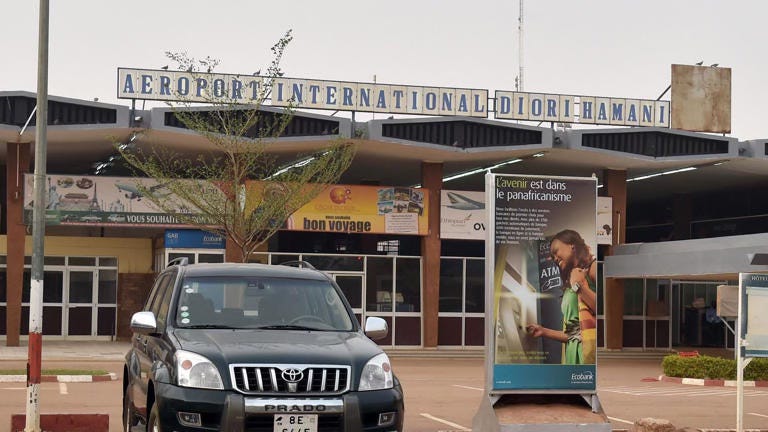
Shortly after midnight local time Thursday, motorcycle-riding gunmen from an Islamic State branch in Africa launched a coordinated attack on the airport and adjacent military base in Niamey, Niger’s capital, shooting at soldiers and blowing holes in the fuselage of an airplane.
It was an especially bold attack, targeting a military compound in an African capital. And while casualties in this case so far appear to be minimal—initial reports suggest that four Nigerian soldiers were wounded and 11 militants killed—it was yet one more demonstration that the jihadi terror group, now largely decentralized, still has the resources and determination to deliver frightening strikes around the globe.
Over the past few years, the ranks of Islamic State branches have surged with multiple attacks throughout West Africa, Iraq and Afghanistan where, according to a recent United Nations report, the organization has recruited some 600 fresh fighters from Central Asia, many of them teenagers.
