A Life Amid Spies
In part two of her series, former State Department official and human rights advocate Roberta Cohen recalls her effort to stop a CIA op in Ethiopia that risked the life of a friendly local official

Author’s Note: If you choose a career in international human rights, expect the intelligence community to show up at your doorstep. Sometimes their agents will wine and dine you if they think you could serve their interests. Other times, they will intimidate and harm you if they think you could be a threat. Usually they are indifferent to the consequences of their actions. These are my stories.
THE ONLY PERSON I EVER THREATENED IN MY LIFE was the CIA station chief in Addis Ababa, back in the 1980s.
The Reagan administration, which took office in January 1981, spoke of “unleashing” the CIA worldwide, which I would soon see led to reckless programs in Ethiopia.
Its government was a Marxist-Leninist military dictatorship aligned with the Soviet Union. Posters of Lenin hung everywhere and security was tight. My husband, David A. Korn, was the chief of mission (or permanent chargé d’affaires—there was no ambassador) and the political environment was hostile.
The regime had expelled the U.S. Information Agency (USIA), the soft power arm of U.S. foreign policy that used cultural exchanges to promote a friendly view of America by local populations. Nonetheless, I soon witnessed something that made me think an American public affairs program could flourish amid the official chill.
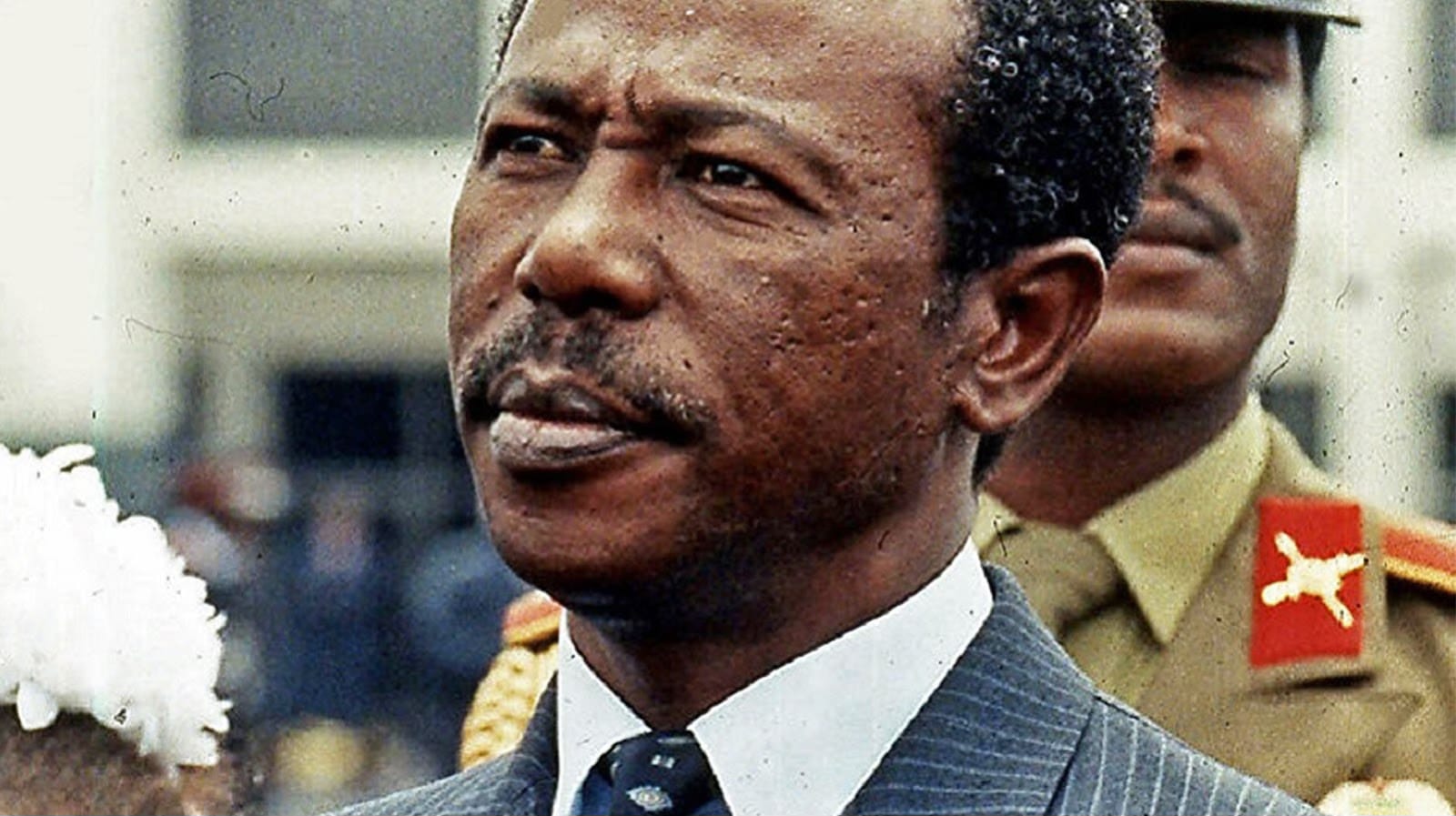
On Revolution Day, 1982, I was in Addis’s Red Square with the deputy chief of mission (DCM)—David was in Washington—listening to the dictator Mengistu Haile Mariam’s three hour speech. The first part was on Marxist ideology and domestic issues, the second on foreign policy with a blistering attack on the United States. He blamed America for just about every ill that had befallen the country and at the end tried to whip up the crowds against the U.S.
I then had to go from the grandstand, with the DCM, into a mass of thousands if not tens of thousands of people, and head toward the big black embassy Cadillac flying the American flag. Panic took over as I realized the embassy’s bodyguard and bulletproof car would not be sufficient protection from crowd violence. But as we neared the car, and got into it, people swarmed around us shouting “Viva America!” And as the car inched through the crowd, people kept knocking on the window, smiling, waving, and yelling Viva America. Evidently, there existed a reservoir of pro-American feeling in the country, with people ready to take some risks; perhaps the regime’s control apparatus was not as absolute as Washington imagined.

Slowly but surely, David persuaded the State Department and White House National Security Council to support the reinstatement of a public affairs program in Addis, while I messaged USIA to fund the public relations effort we were making. In time, I was given a part time position, and managed to reopen the Fulbright program at the university and arrange educational film showings on mass media. But it soon became evident that moving the program forward in a more significant way would require entrée into Ethiopia’s ministry of information.
The number two official at the ministry was somebody I belatedly realized I had met 20 years ago when he was a grad student in the U.S. Let’s call him “G.” He had been studying communications at the University of Chicago when he visited the Johns Hopkins School of Advanced International Studies (SAIS) in Washington where I was studying. Short, thin, wiry, and dark, he was a Marxist revolutionary who spoke incessantly about the poverty and ill-treatment of the Ethiopian people under Emperor Haile Selassie and the need for radical reform. I found his knowledge, determination, and intensity mesmerizing.
There was also a kiss, just one, at the top of a hill on D.C.’s Wyoming Avenue Northwest when he walked me home one evening. Soon followed an intense love letter from Chicago that I never answered. I couldn’t imagine the kind of relationship we’d be able to have.
The Approach
Now wondering if he’d remember me, I used a friendly go-between, the director of the Goethe Institute, Germany’s cultural arm in Addis. He arranged a private meeting at his home one evening. My husband and I arrived in an unofficial car and at a different time than G. The fact that a senior official agreed to come, my husband told me, meant he was interested in defecting and would want our support.
G was guarded but cordial and said he’d invite me to the ministry and, if he could, help advance the U.S. public affairs program. When later I was received at the ministry, I didn’t report to USIA, State, or even my husband that the first question he asked me was, “Why didn’t you answer my letter?”
The fact that a senior official agreed to come, my husband told me, meant he was interested in defecting and would want our support.
Over time, the Ethiopian press began to cover U.S. book donations to Addis Ababa University, and most importantly American food shipments during the famine (far greater than what their Soviet ally was providing). Soon, photos of me and my husband appeared in the papers, Ethiopia’s TV and radio directors visited the U.S., American films began to play on local TV, American scientific and agricultural information could be heard on the radio, and an American training program for mass media was introduced.
Whenever G and I met for lunch, we couldn’t speak openly, as security people often seated themselves at adjacent tables. Being under some control by Ethiopian security, he was required on each occasion to ask me how many American staff were at the embassy. (The regime feared we might secretly exceed our limit of 27.) On one occasion when we met, I said “Good afternoon,” and before he asked, I said, “It’s 27 by the way,“ and he gave me a relieved smile. He had become so disenchanted with the revolution, he told me, that he would send me literary essays and poems to express his thoughts. At times, we managed to have some fun. He made sure, for instance, that the English and Amharic editions of the main newspaper published a letter I wrote, which asked:
“When will the Ethiopian Herald begin to publish articles about women written by women? Whether the subject is choosing a husband, education and training for women, or a woman’s feelings on her wedding night, the author is always a man. You’d learn far more if you asked a woman.”
The editor added, probably after being instructed by G: “We do encourage women to write, and our paper is keen to publish materials written by women.”
Threats
The rumor mill in Addis, meanwhile, said we were lovers as graduate students in the U.S. We both let the rumor circulate unchallenged because if it were thought he was helping the Americans for political reasons, it would have placed him in grave danger.
It was around this time that the CIA station chief approached me. “I hear you know [G.],” he said. “Why don’t you organize one of your soirées and bring me together with him?” I then learned G had tried to defect three years ago while at a meeting in Paris but the CIA and G didn’t reach agreement. The CIA wanted him to be an “asset” (i.e., spy) in Addis, which he considered too risky. He wanted to go to the States and help the U.S. from there. But the agency had larger aims.
I explained to the station chief that “If the CIA were to use my program as cover, it would damage all that I’ve put together, and [G] would probably get hurt. I won’t tolerate that. So the answer is no.”
But the station chief did not commit as to whether the agency would go forward on its own. And that was quite possible: It did have ammunition from G’s time in Paris with which it could blackmail him and induce him to work for them. That, of course, might well get him killed in Mengistu’s police state.
Suddenly realizing I might be G’s sole protection, I stood up from my chair. “If you do anything, anything at all that can harm or put G or his family in danger,” I said, “I want you to know.…I personally will do you bodily harm.”
I never before had threatened anyone in my life. When I told my husband, he said, “Sweetheart, I’m sure he wasn’t the least bit threatened. Do you not see the shape he’s in?” The station chief was at least 6-feet-2 and known to jog and work out every morning despite the capital’s nearly 8,000-foot high altitude. I was 5-feet-2 and by comparison, physically unfit. The chief, I learned, had also qualified for a black belt in karate.
But David hadn’t witnessed the rest. I’d told the station chief I would not leave his office until he promised to leave G alone. Without any expression in his sphinx-like eyes, he nodded, and as far as I know, didn’t make any move to recruit G.

But whether he would do so in the future I would never learn because the entire CIA team was expelled from the country. One of its officers, abducted from a safe house and beaten by Ethiopian security, reportedly gave away the names of the rest of the team. I also heard he gave up the names of Ethiopians working with the CIA who had been placing anti-Mengistu posters around town among other acts of protest. One of the Ethiopians who I knew came frantically to my office to ask where he should hide (he apparently thought I was the station chief). It was then that I realized the CIA had no refuge for these people.
“You do need to get out of town,” I told him. But none of the Ethiopians whose names were revealed had anywhere to go and were arrested, tortured, imprisoned, some even killed, their pictures displayed in the Ethiopian press as traitors.
David, together with Vernon Walters, a former deputy head of the CIA and presidential envoy who was dispatched to Addis in the crisis, succeeded, at a meeting with Mengistu, in getting the American CIA officer released. The agency people then left the country, with some embassy staff waving them off at the airport.
“If you do anything at all that can harm or put G or his family in danger,” I told the CIA station chief, “I want you to know.…I personally will do you bodily harm.”
Meanwhile, I’d been laying low and had no contact with G until one evening when he called our residence to tell us he didn’t want to write speeches for Mengistu anymore. Our lines were bugged, so I wondered how to get him out of Addis. I consulted the USIA programs and advised him to apply for a short-term senior Fulbright fellowship, which he was awarded. While in Boston, and near breakdown, he jumped out the window of a building, accidently landing on a ledge, which broke his back but didn’t kill him. I helped arrange political asylum for him, his wife and son.
Pain, Gain
The risks he had taken for my program contributed to the formal reinstatement of USIA in Addis, signed off by the Ethiopian minister of information and approved by Congress. USIA gave me a superior honor award and sent a senior officer to Addis to replace me.
On returning to Washington, more than five years later, I ran into G who, now recovered, was working at the National Academy of Sciences, where I by coincidence became a human rights adviser. Having adapted to a new life in America, G wanted to renew our friendship. But re-living that tense,‘war zone’ like experience was too painful for me, so I bid him farewell, feeling the need to place all the drama around our relationship into the realm of memory. ###
Ms. Cohen was a deputy assistant secretary of state in the Carter administration Next: Confrontations with the KGB.


From the author to Colin Thompson and Hang Gliding Pie Cherry—This is not a matter of misunderstanding about how embassies operate. The Chief of Mission tried to stop the CIA program early on because he was persuaded it was going to end in disaster, which it did. The Tim Reiser book Legacy of Ashes, which devotes a few pages to the operation, quotes the Charge as follows: “The Reagan administration took a covert operation that begun on a very small scale under Carter and made it into an activity to be carried out inside Ethiopia. This was something I didn’t believe would go undiscovered and tried to get it stopped. I was sure that given the surveillance the Ethiopian government exercised over us that this would be discovered. It was.” As for me, I understood in this charged political/security environment that the only way a public affairs program would succeed would be to steer clear of the CIA operation and all the suspicion around it. In 1985, the Charge received the presidential meritorious honor award for his performance in Addis; USIA gave me its superior honor award for reopening the public affairs program against all the political odds. (A p.s.— when staff were together including me and the station chief, there were cordial relations. He and I actually joked about our situation.)
I am thoroughly confused by Ms. Cohen's tale of her experiences in Ethiopia, at the U. S. Embassy there and with the CIA presence in the embassy. Part of the job of each CIA station chief is to establish and maintain good relations with the U.S. ambassador and his or her staff. It makes life easier, but there is always ample room for misunderstandings, as in Ms. Cohen's case. I don't think she understands what they were, and that mars her story.
I spent nearly 11 of my 28 years with the CIA overseas, most of them working at U.S. embassies, including a brief spell at the one is Addis Ababa, several years before Ms. Cohen did.