

A CIA Officer Returns to Iraq and Uncovers Embarrassing Details of the Spy Agency’s WMD Debacle
Jerry Watson is suing the CIA to admit its coverup of intelligence misjudgments that led to the 2003 invasion of Iraq

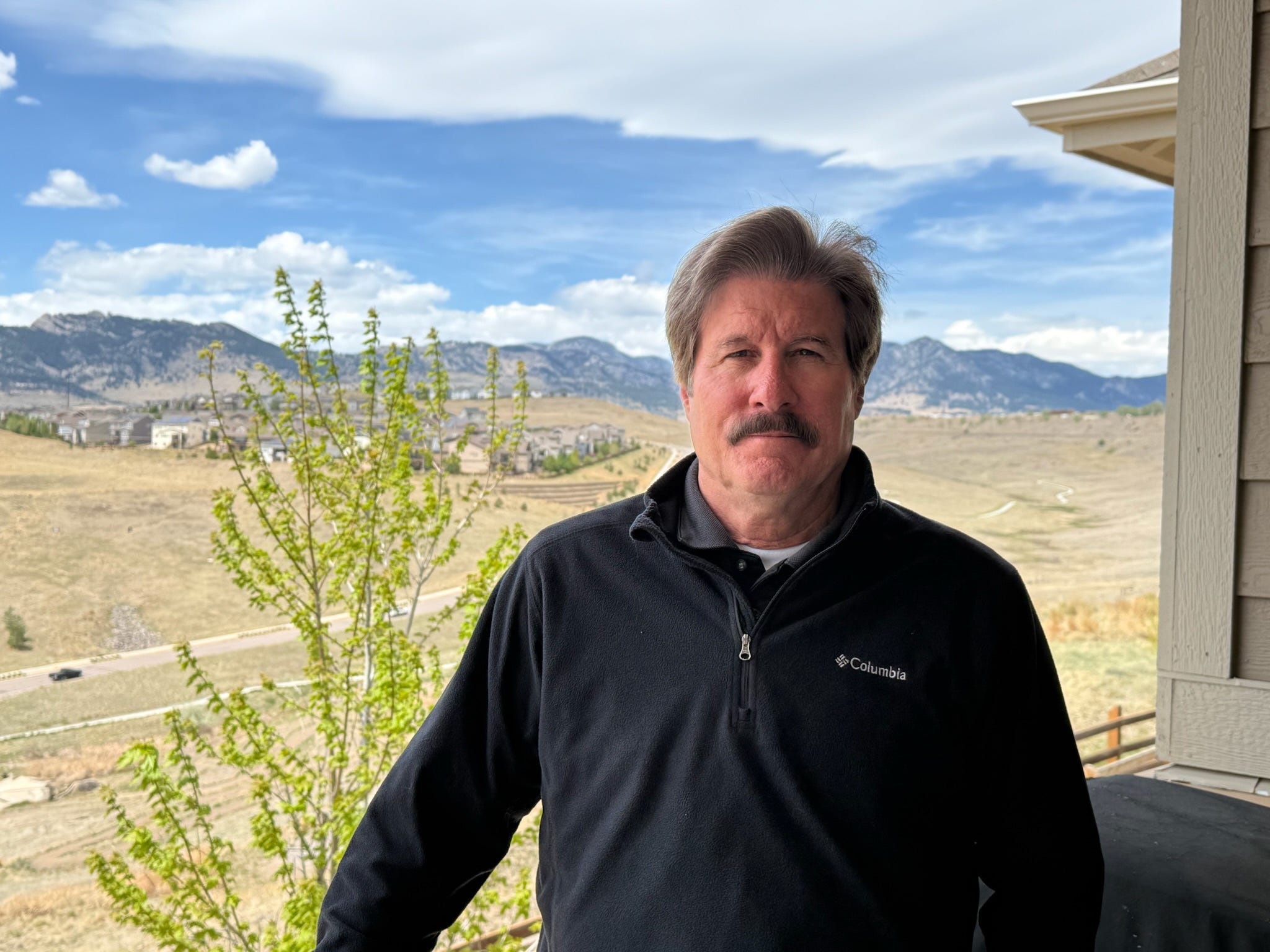
In Part One of our story, reporter Bob Drogin recounted how former CIA officer Jerry Watson came to realize to his horror that “Curveball,” code name for an Iraqi refugee who became a vaunted intelligence source, had entirely fabricated his tale that Saddam Hussein had mobile biological weapons labs—a principal reason cited by top George W. Bush administration officials for the invasion of Iraq. Now, in Part Two, Drogin recounts how Watson’s efforts to get the CIA to come clean were stymied at every turn, ruining his career—and why he’s taken the agency to court to set the record straight.
JERRY WATSON WAS DETERMINED to find the truth about Rafid Ahmed Alwan al-Janabi, the Iraqi source codenamed Curveball.
He returned to Baghdad in September 2003 and assembled a small team—two analysts, an operations officer and a few security guys. Their first stop was the home of al-Janabi’s boss at the engineering center where he claimed he had worked until 1999.
“He told us that [al-Janabi] quit in the last few days of 1994. He said he didn’t like the low pay and boring work, and walked out and never returned. So they terminated his employment.
“That told us everything Curveball had said about the mobile plants was a total fabrication. No question. No debate. We had been in Baghdad for two days.”
After finding al-Janabi’s address, photo and college transcripts, they knocked on the gate of his family’s home.
“They said, ‘Of course, come on in.’ He had 10 brothers and sisters, I think. Served us tea and baklava. Nicest people in the world.”
One of the sisters told them her brother had worked for Babel Film and Television Production, a local company, after he quit the engineering center. At Babel, one of the senior officials remembered him all too well.
“I asked, ‘Was he a good employee?,’” Watson recalled. “He said, ‘No, he stole some equipment and sold it on the black market and cheated us.’ I started laughing. They said they had filed an arrest warrant against him in criminal court.”
They kept investigating. By late September, they had assembled what Watson called “overwhelming evidence, going back 15 years, that Curveball was a fabricator. And [still] no one would believe it.”
His superiors at WINPAC, the CIA center that focused on foreign weapons threats, “did not like the fact we were digging up contradictory and derogatory intelligence on Curveball, and pushing the intel services involved to accept it,” he said. “They wanted us to slow down and be team players in the Iraqi sandbox.”
Others in Washington and London wanted to keep the WMD search going, if only to delay political accountability for a devastating intelligence failure while they fought a growing insurgency in Iraq and a global war on terrorist groups.
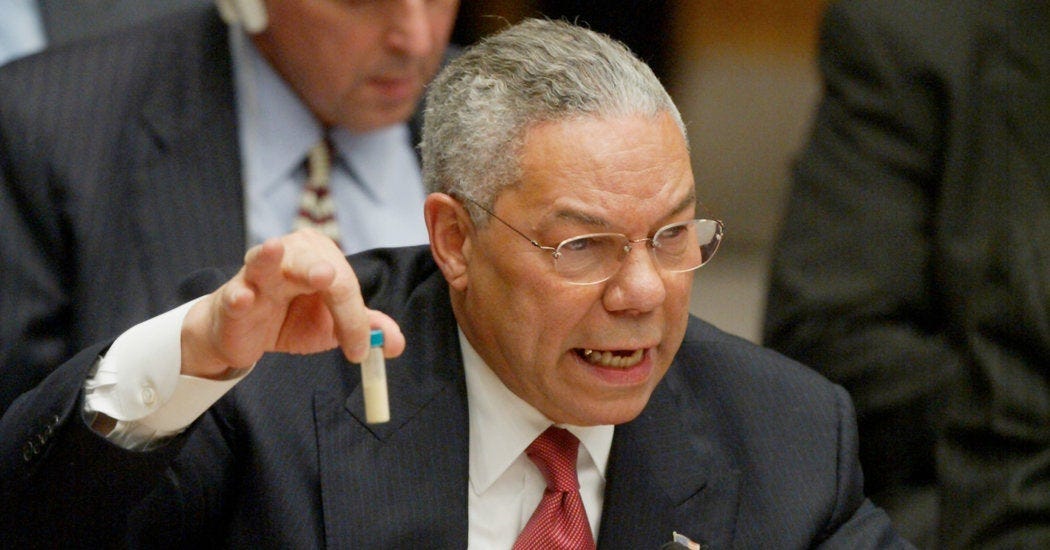
When the CIA refused to disavow its Curveball claims, the Germans got cold feet. In October 2003, Watson presented his findings to about 30 people at a conference, codenamed Grey Hole, at the headquarters of Germany’s foreign intelligence agency, the BND, in Pullach, outside Munich. He put his documents, photographs and other material from Iraq down on the table, one by one, as he spoke. They proved that Curveball had lied, he said.
“No one picks up anything. I say, ‘Any questions?’ Dead silence. Not a single one,” he recalled.
After it ended, the BND barred him from a planned meeting with Curveball. “The next day the Germans said, ‘We asked him about all this and he had good answers, so none of it is relevant,’” he said.
Frustrated, Watson returned to Langley in hopes of convincing CIA leaders of their mistake. But when he entered WINPAC’s 5th floor office, someone was sitting at his desk. It still had framed photos of Watson’s wife and two kids.
”And the team chief came in and said we’re gonna put you in another room. He led me down the hall to a storage area with file cabinets. It had a single desk with boxes piled up all around it.”
He was told he could not brief CIA chief George Tenet or other agency leaders on his findings, and was barred from writing an internal report about them.
“A few weeks later I was called into the group chief’s office and kicked out of WINPAC. He called me a troublemaker. And he said I’d gone native… After that I was radioactive.”
Frozen Out
Former CIA senior analyst Larry Fox, who led the search for chemical weapons in Iraq, told me that he fought back tears when he shared his finding with David Kay, who headed the agency’s WMD hunt, that none existed. Word got back to Langley and Fox, too, was shunned by CIA leaders when he returned. “They put me in an outlying office with no ability to talk to people,” he said.
Kay was also treated shamefully. After he told Tenet in November 2003 that Saddam had no WMD, he was assigned an office without a classified computer or secure phone in a wing under construction. He quit and told Congress in January 2004 that “we were almost all wrong” on Iraq’s WMD, the first official to admit the intelligence failure. Kay died in 2022.
Watson stayed another 14 years at CIA, mostly in a joint operation with the Defense Intelligence Agency to secretly buy tanks, planes and other weapons from foreign adversaries. He even returned to Iraq for a year as a case officer. But his career never recovered and he remained a GS-14, roughly equivalent to an army lieutenant colonel.
The Curveball case collapsed when the BND finally let a CIA case officer debrief him for the first time in March 2004. The Iraqi had demanded $150,000 but he got $10,000, with a promise of more if he told the truth.
He didn’t. The CIA issued a “burn notice” and formally declared Curveball a fabricator in May 2004, and the CIA, DIA, Britain’s Secret Intelligence Service (aka MI6) and BND withdrew all their mobile lab reports. The White House was informed in a President’s Daily Brief and Congressional oversight committees were notified.
Watson retired on the last day of 2017, and called me a few weeks later because I had written a book about the case, Curveball: Spies, Lies and the Conman who Caused a War. We met at a restaurant in Reston, Va., and he talked almost nonstop for four hours. A stocky figure, with thick brown hair and a bushy mustache, he seemed consumed by the bungling in the Curveball files.
A few months later, I visited him at his home in nearby Sterling and he pulled out a dog-eared copy of my book. He had scribbled in the margins and added a thicket of Post-it notes to show where he agreed with it and where he didn’t. He planned to write his own book, he said.
I didn’t think much about it until February of this year, when Watson got in touch again. His story had taken another bizarre turn.
CIA Censors
He had written a 1,500-page account of the Curveball mess, he told me. In February 2025, after a former colleague suggested trims, he emailed an 850-page version to the CIA’s Prepublication Classification Review Board. The PCRB is responsible for clearing proposed books by former CIA officers, who are bound by secrecy agreements, to prevent unauthorized disclosure of classified material.
In emails last year, the PCRB told him to “remove all classified information, the accompanying citations, and resulting assessments and story lines.” It did not identify any offending passages, however. Watson responded that his book had none.
Watson had previously filed Freedom of Information Act requests for 120 classified CIA and DIA documents from the botched case. They shouldn’t have been hard to find: Before retiring, he left copies in a binder in the CIA historian’s office, as well as an internal 350-page history of the Curveball case that he wrote.
The two issues merged when the PCRB informed Watson last September that it could not approve his book until he either removed all “currently and properly classified information”—which it again did not identify—or until his FOIA requests were resolved, a process that officials said could take years.
In response, Watson reached out to Mark Zaid, a lawyer specializing in national security cases who has litigated more declassification cases than anyone in Washington. They sued in federal court in Washington in December 2025, arguing that the CIA had violated Watson’s First Amendment rights when it “unlawfully imposed a prior restraint” on his book.
The PCRB decision to wait for the FOIA responses is “bullshit,” Zaid told me. The board could release a book—even if it includes classified information—if the CIA deems it in its interest. “That has happened.”
Zaid said most disputes with the PCRB “end up with a book of publishable quality,” although it may involve substantial cuts. “Most of the time there’s a middle ground.”
The CIA has asked U.S. District Court Judge Carl J. Nichols to dismiss the case. In an amended motion on April 24, James O. Bickford, a Justice Department lawyer, argued the case was “not ripe” for judicial review because the PCRB is conducting a “line by line” review of the manuscript. In theory, it could bar the release of the entire book. That has also happened.
Zaid’s response is due on May 22.
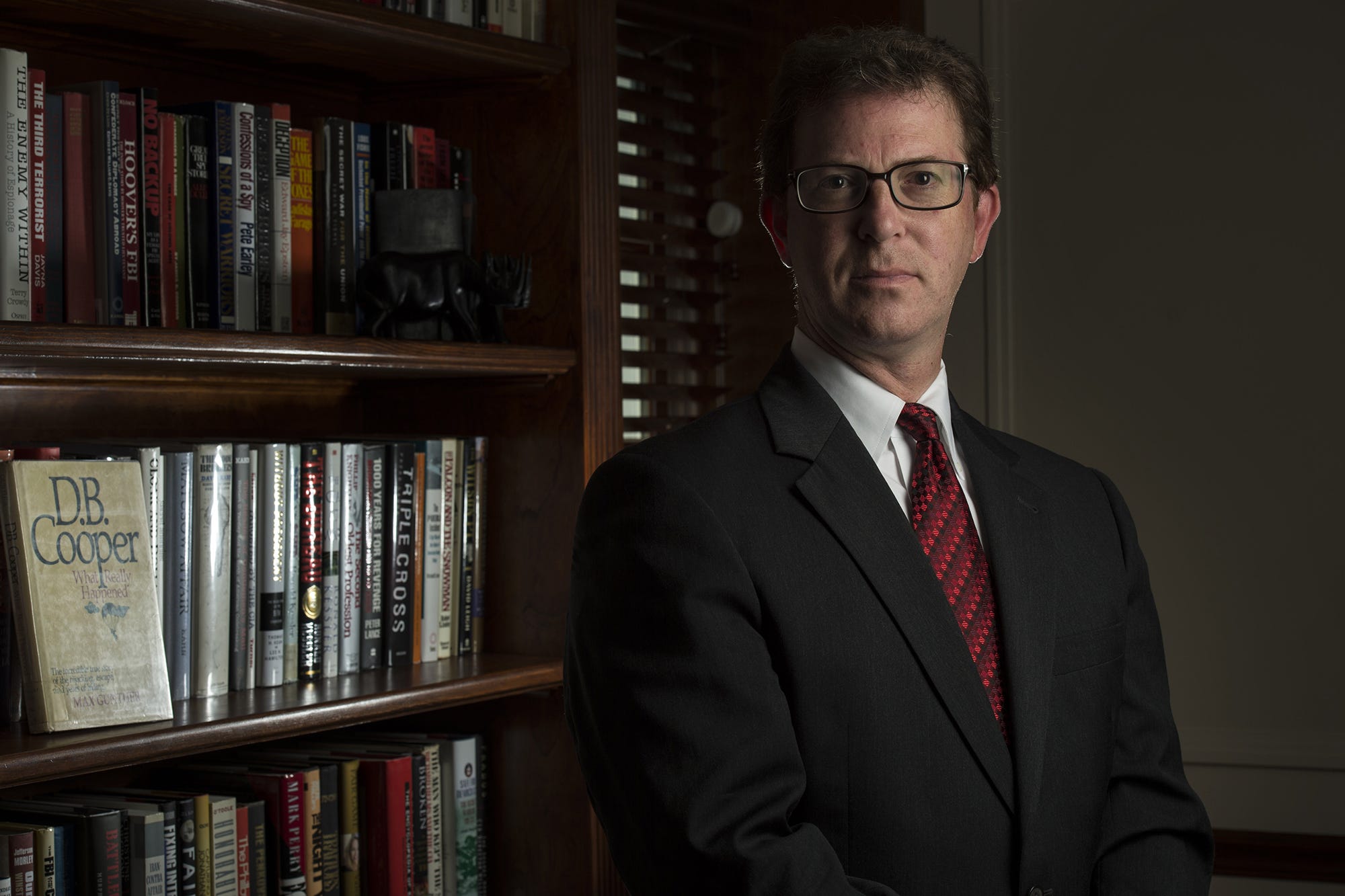
There is another wrinkle. In an effort to publicize his legal plight, Watson drafted a newspaper op-ed last December and submitted it to the PCRB. He titled the essay, “The CIA and DIA: Hiding Intelligence Mistakes Behind the ‘Cloak of Secrecy.’”
The PCRB sent it back on March 6 with what it called “mandatory” deletions on five of the six pages.
Among them, it blacked out al-Janabi’s name, although he was first identified by 60 Minutes in 2007. It even redacted a line noting that he had appeared on 60 Minutes in 2011, during which he admitted he had conjured up the mobile labs.
“They said that’s all classified,” Watson said. “That’s how absurd this has gotten.”
As the legal battle heats up, Watson walks his Alaskan malamute each day on rocky trails near the Front Range of the Rockies. He chews over the Curveball case, like his dog with a bone, aware that he has taken on the world’s most powerful spy agency—a place that he knows well and loyally served for over three decades.
“The true, accurate and shocking story has not been told,” he told me. “Eventually it will be, and I intend to be on the right side of history.” ###
Pulitzer Prize winner Bob Drogin spent 38 years at the Los Angeles Times, where he was a national, foreign and Washington correspondent. He helped break the Curveball story in 2004, and is author of Curveball: Spies, Lies and the Conman who Caused a War, published in 2007 by Random House.
Hey Colin, thanks for the comment. I won't speak for Jerry Watson here but I think the PCRB put him in an untenable position by demanding he remove all classified material, and everything stemming from it, without telling him what that might be. I spoke to other authors who got their manuscripts back with clearly identified pages or passages for deletion or rewriting, so that they could then negotiate, as you suggest. How is Watson supposed to negotiate on this? Mark Zaid clearly knows how the system is supposed to work. I don't believe he would take the case, and press the lawsuit, unless he felt there was grounds for getting the PCRB to take another look at this.
He's a brave man. I look forward to reading his testimony.